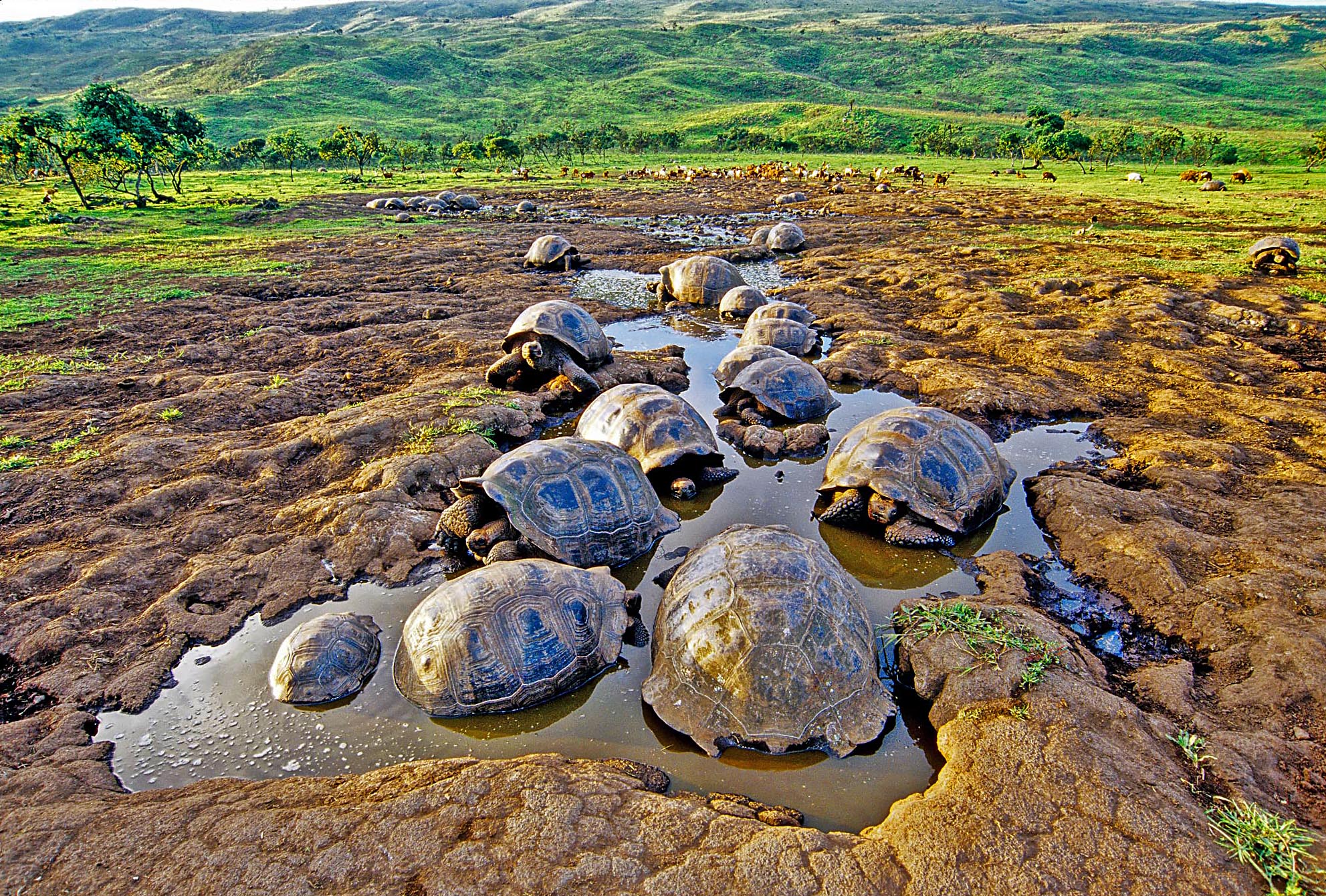
Giant land tortoises (Chelonoidis vandenburghi) attracted to pools of water near the summit of Volcan Alcedo (Isabela Island). In the background is a herd of nearly a hundred feral goats waiting for me to move away from where I was standing when I took this photograph, so they can get to the pools of water to drink. Feral goats invaded Isabela's Volcan Alcedo from the southern side of the island sometime in the early 1970s. Their numbers subsequently grew to about a hundred thousand before they were finally eliminated in 2005, after nearly a decade of intense effort, by sharpshooters using helicopters.
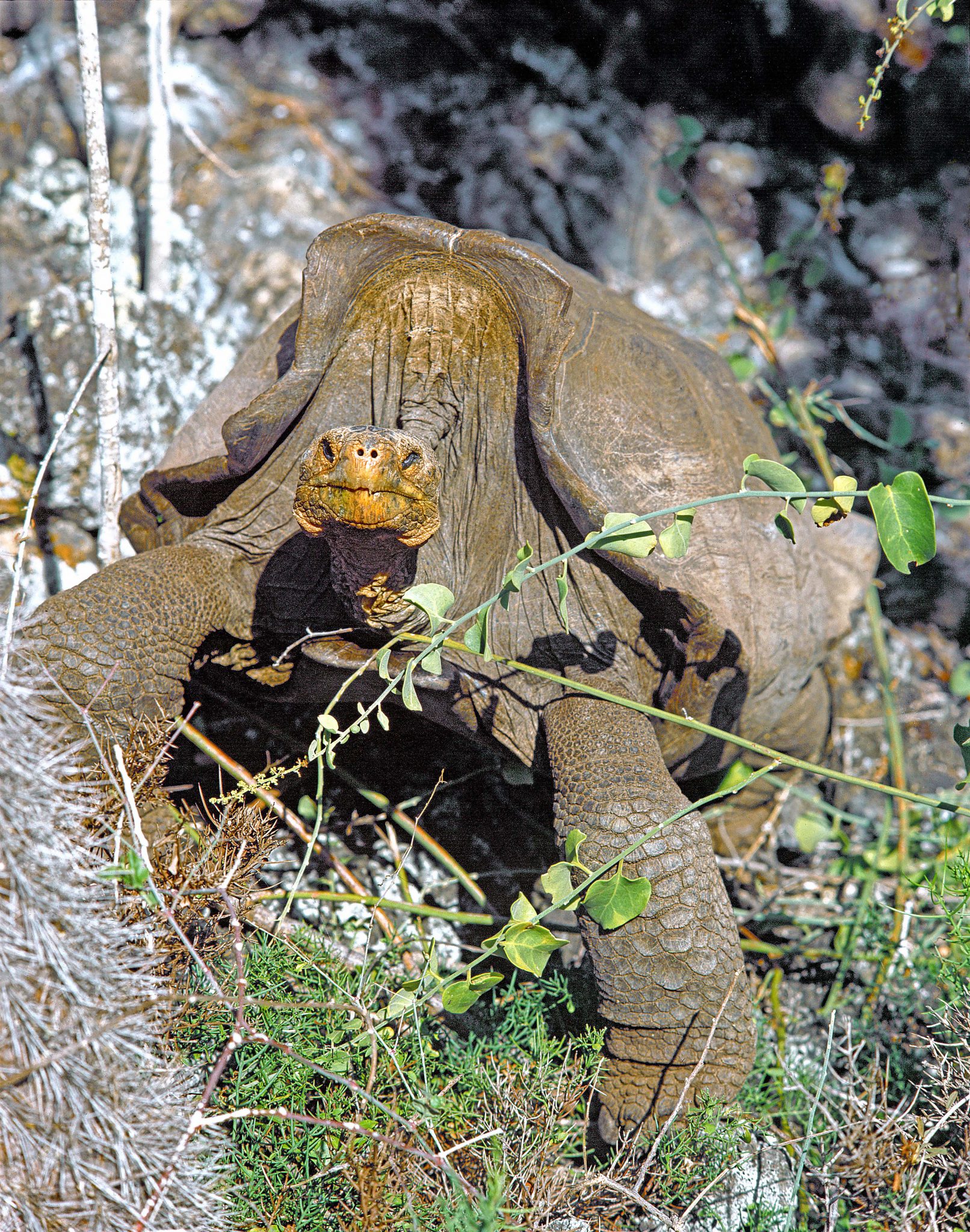
Diego, a saddleback tortoise (Chelonoides hoodensis) from Española. This tortoise was housed since 1977 at the Charles Darwin Research Station as part of a breeding program to reestablish tortoises on Española, where there were only 14 other tortoises remaining by the late 1960s. Now that the breeding program with these 15 tortoises has successfully restored more than two thousand tortoises to Española, Diego and the other 14 tortoises have finally been repatriated to their original home. For Darwin's observations about Galápagos tortoises, and for their influence on his scientific thinking, see Sulloway (2009) and Sulloway (2021).
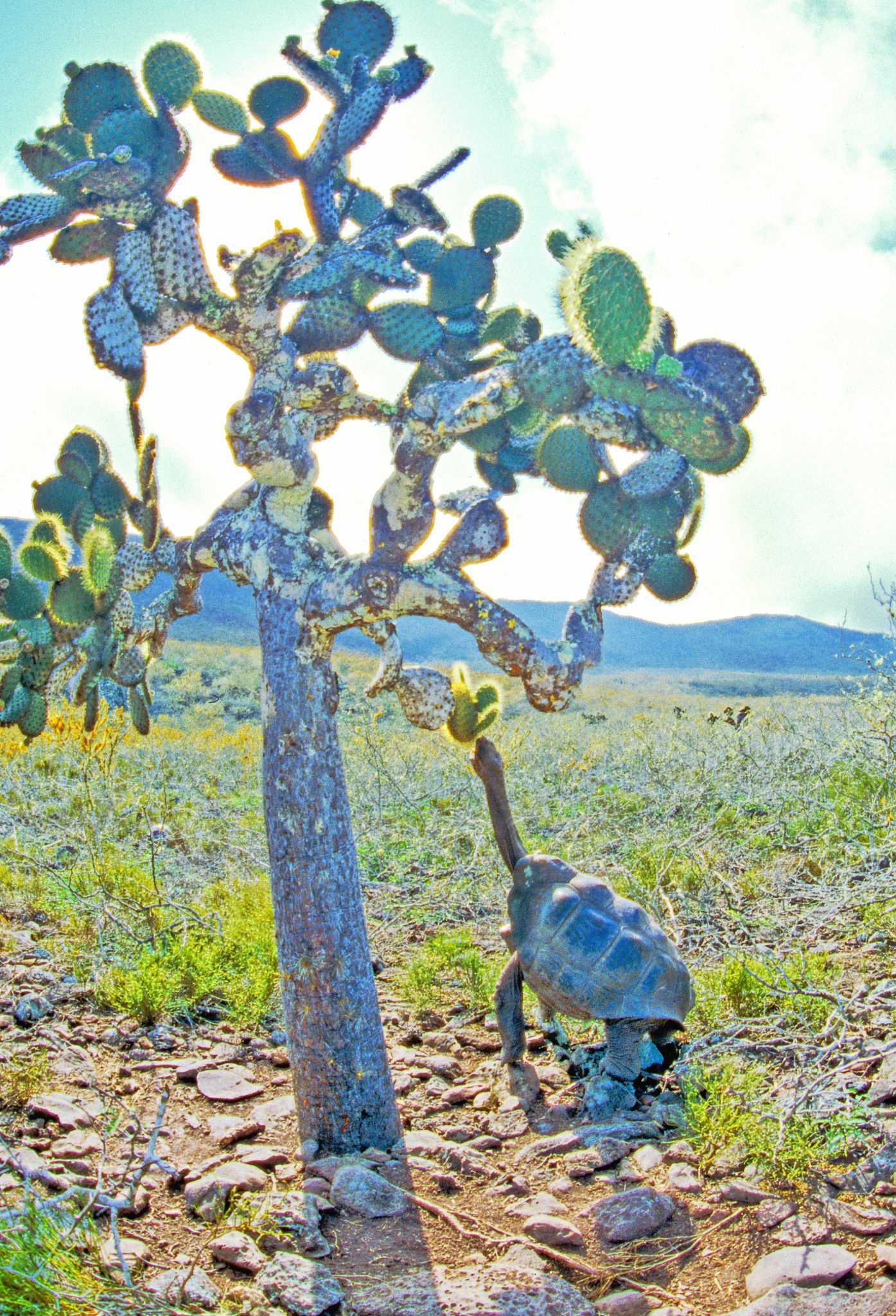
A saddleback tortoise (Chelonoides duncanensis) on Pinzón, stretching its neck to reach an Opuntia cactus pad. These cactus pads provide a crucial source of water for tortoises. Saddleback tortoises, which have their carapace elevated above the neck to facilitate greater neck and head extension, are found only on the drier islands in the Galápagos group, where giant tree Opuntia are also found. On islands lacking tortoises, the Opuntia exist as bush forms, reflecting the coevolution of Opuntia and tortoise morphology,
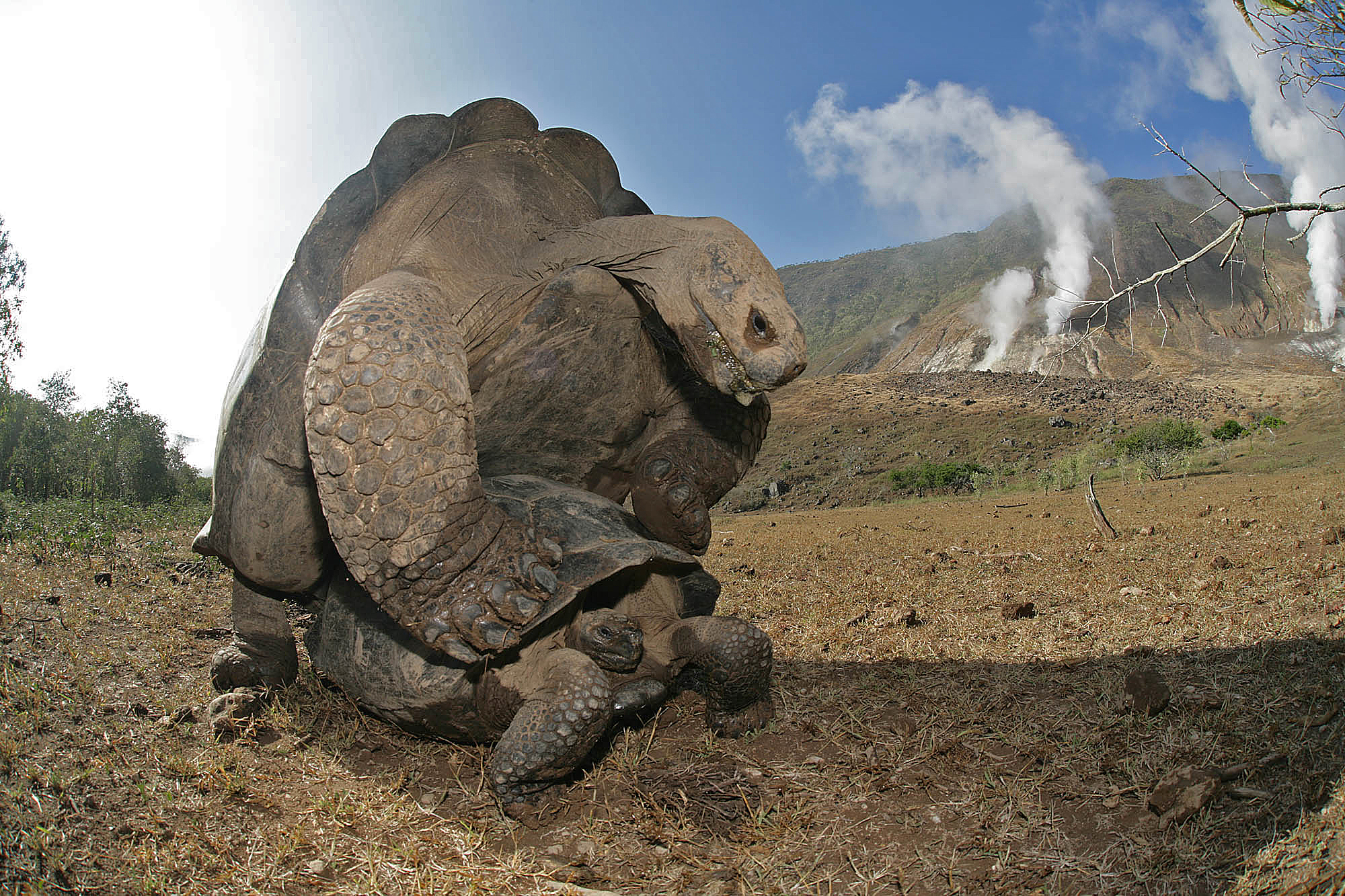
Tortoises mating inside the caldera of Volcan Alcedo. Three active fumaroles can be seen in the background.
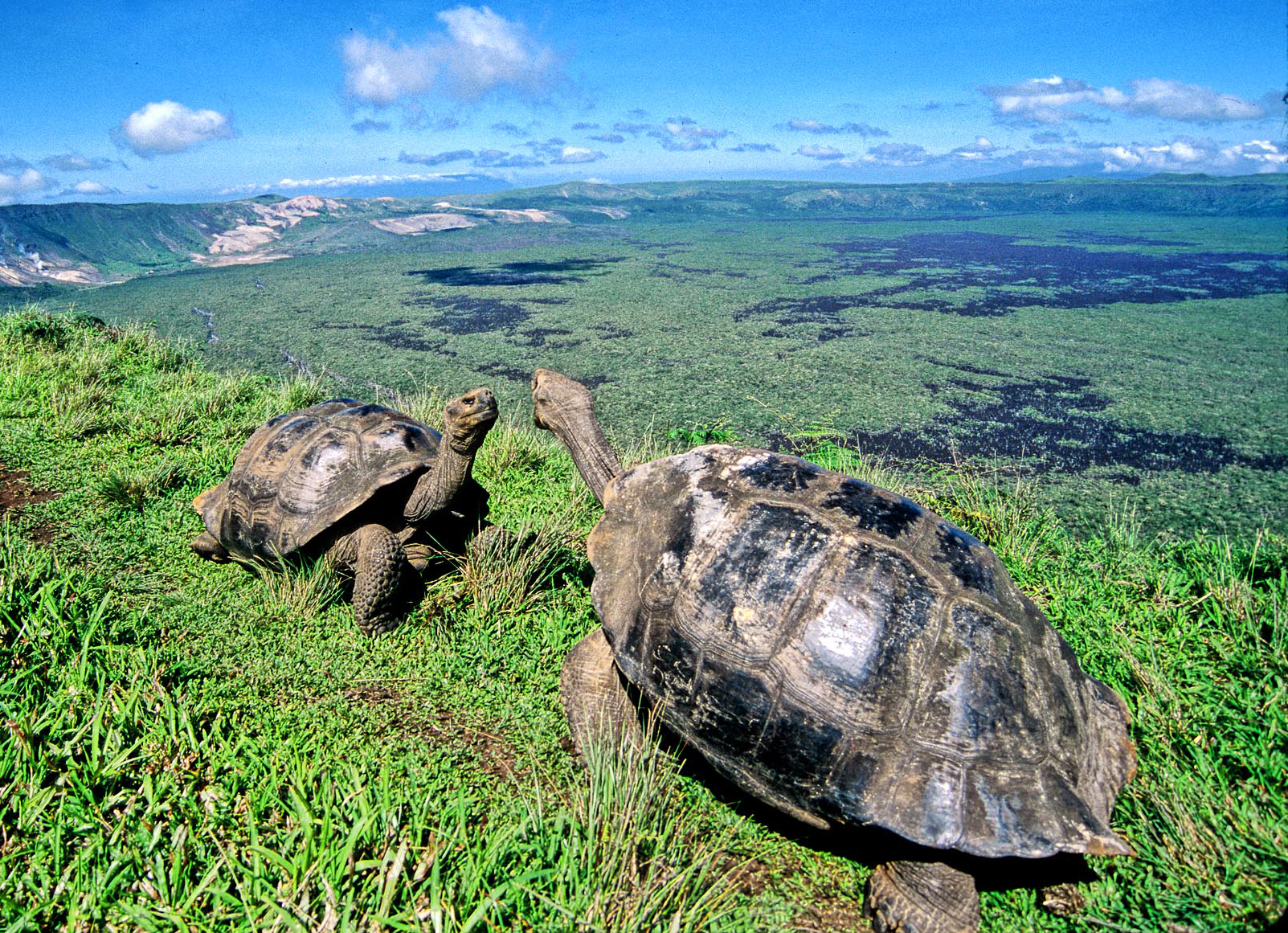
Two tortoises encounter one another on the rim of Volcan Alcedo. The larger of the two tortoises, a male, is stretching his neck upward to assert dominance over the smaller tortoise.
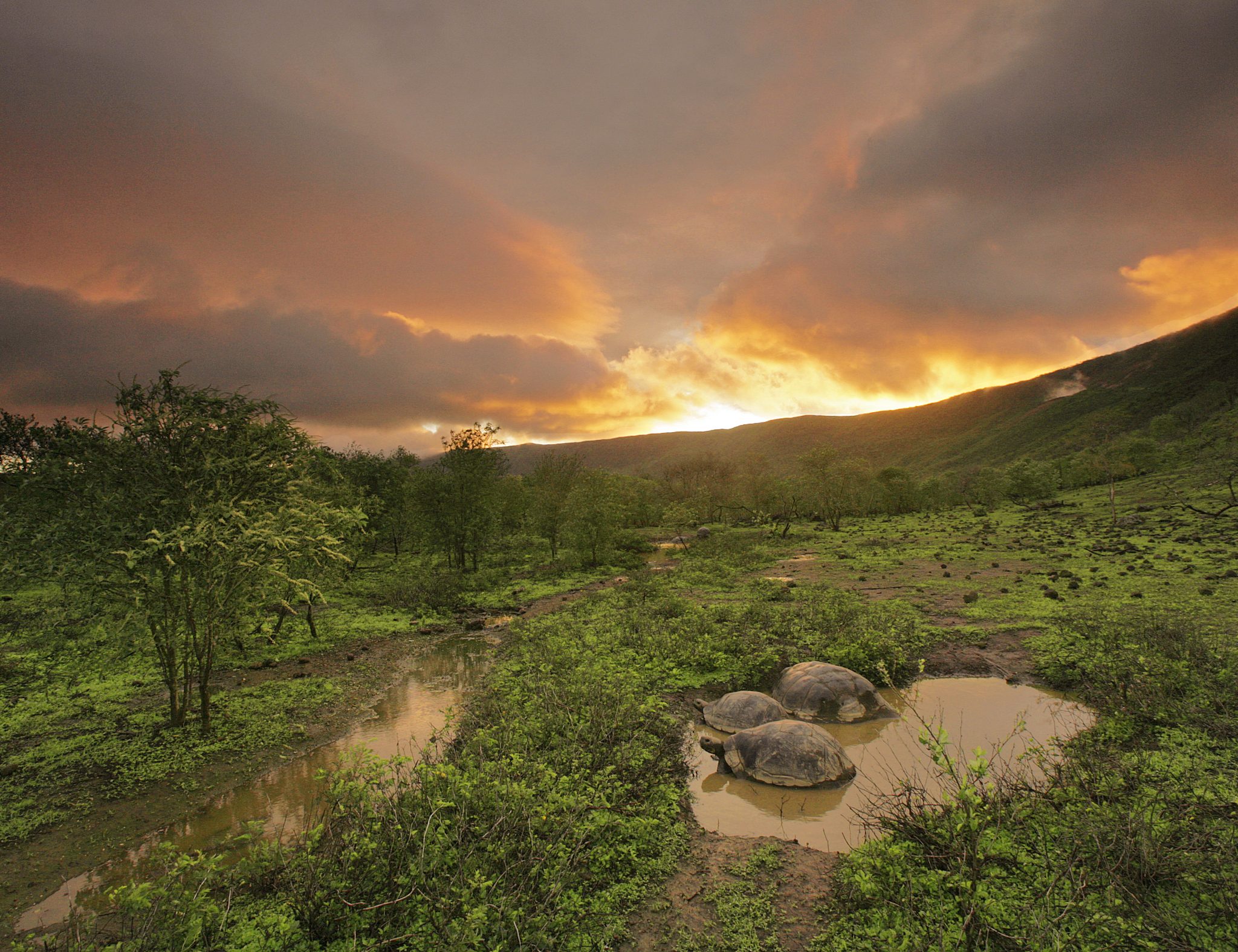
Tortoises at dawn, in a pool of water on the caldera floor of Volcan Alcedo (Isabela).
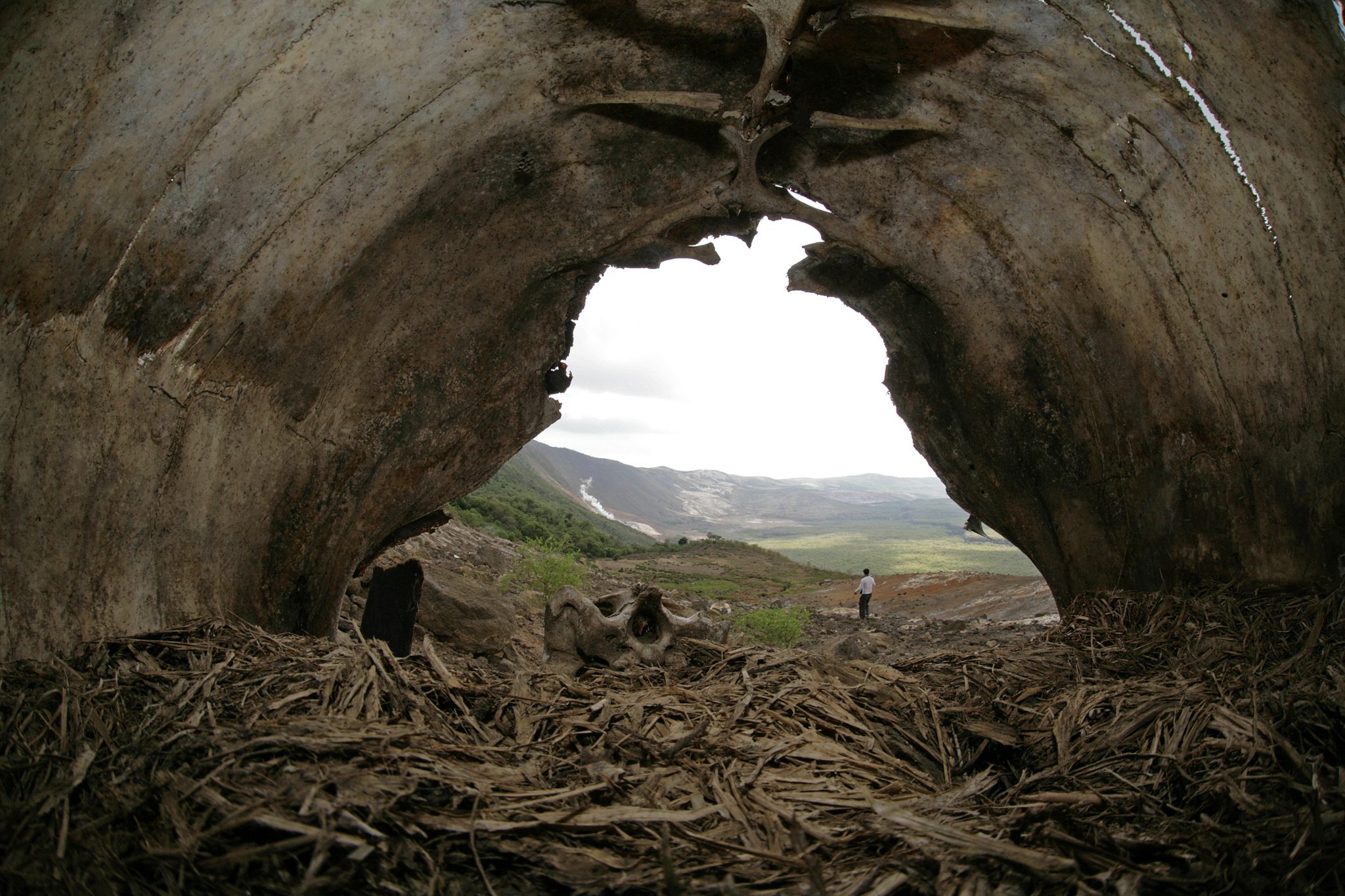
A view of the calder of Volcan Alcedo from inside the carapace of a dead tortoise. Galapagos tortoises can live for up to 180 years.
In his Journal of Researches (1839: 464-465) Darwin noted that "the old ones seem generally to die from accidents, as from falling down precipices.
At least several of the inhabitants told me, they had never found one dead without some apparent cause."
The tortoise that once carried this carapace appears to have died after falling off a steep caldera wall to the left. This tortoise's last few meals are surprisingly well preserved at the bottom of the carapace. The person visible in the distance is Google cofounder Sergey Brin, who accompanied me on a research trip to the Galápagos in 2007.
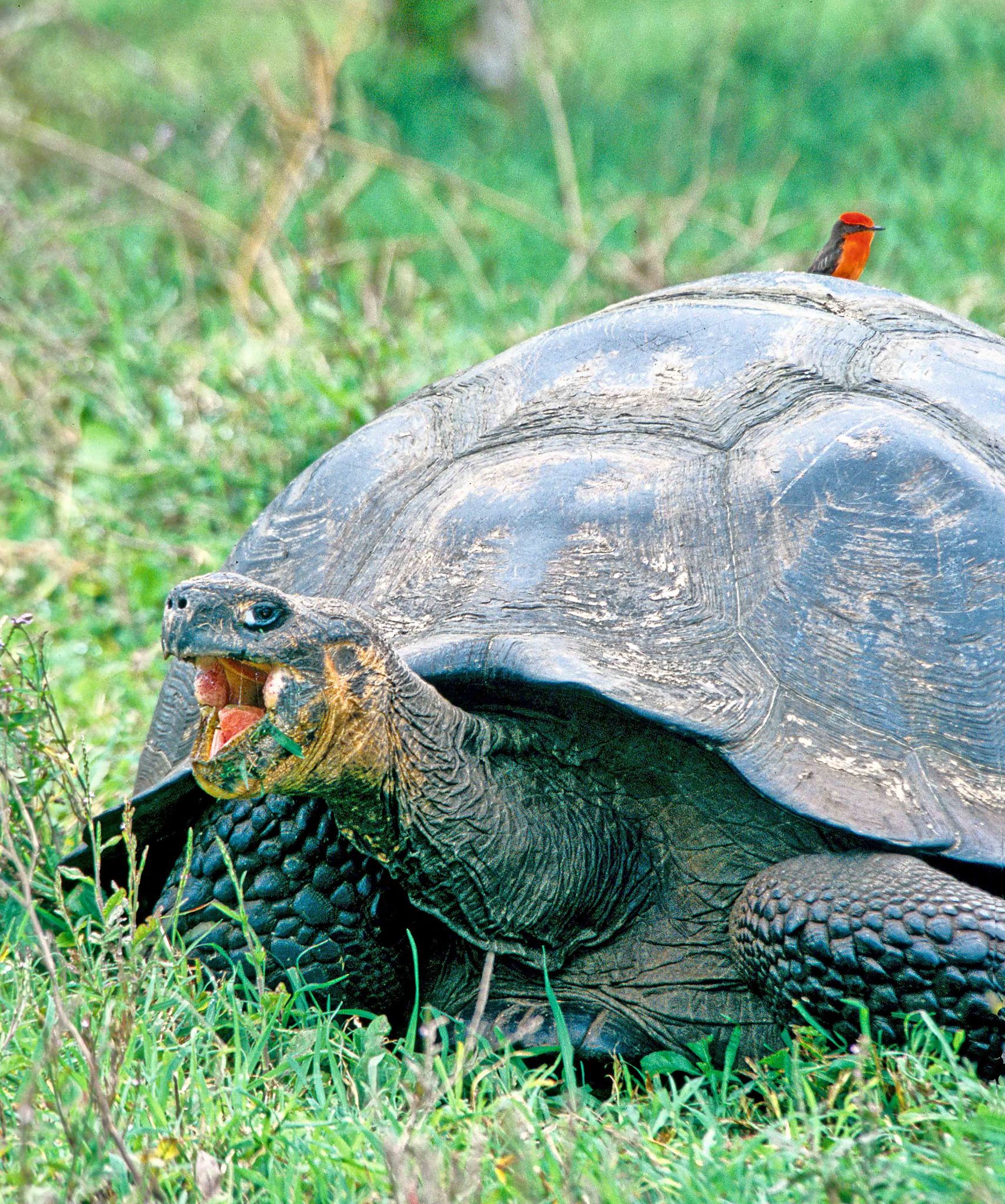
A dome-shaped tortoise (Chelonoides porteri) in the highlands of Santa Cruz Island. Vermilion flycatchers sometimes perch on the backs of tortoises, which tend to attract flies. From their perch on the back of their chosen tortoise, the flycatcher sallies forth into the air, catches its prey, and then returns to its perch on the back of the tortoise.
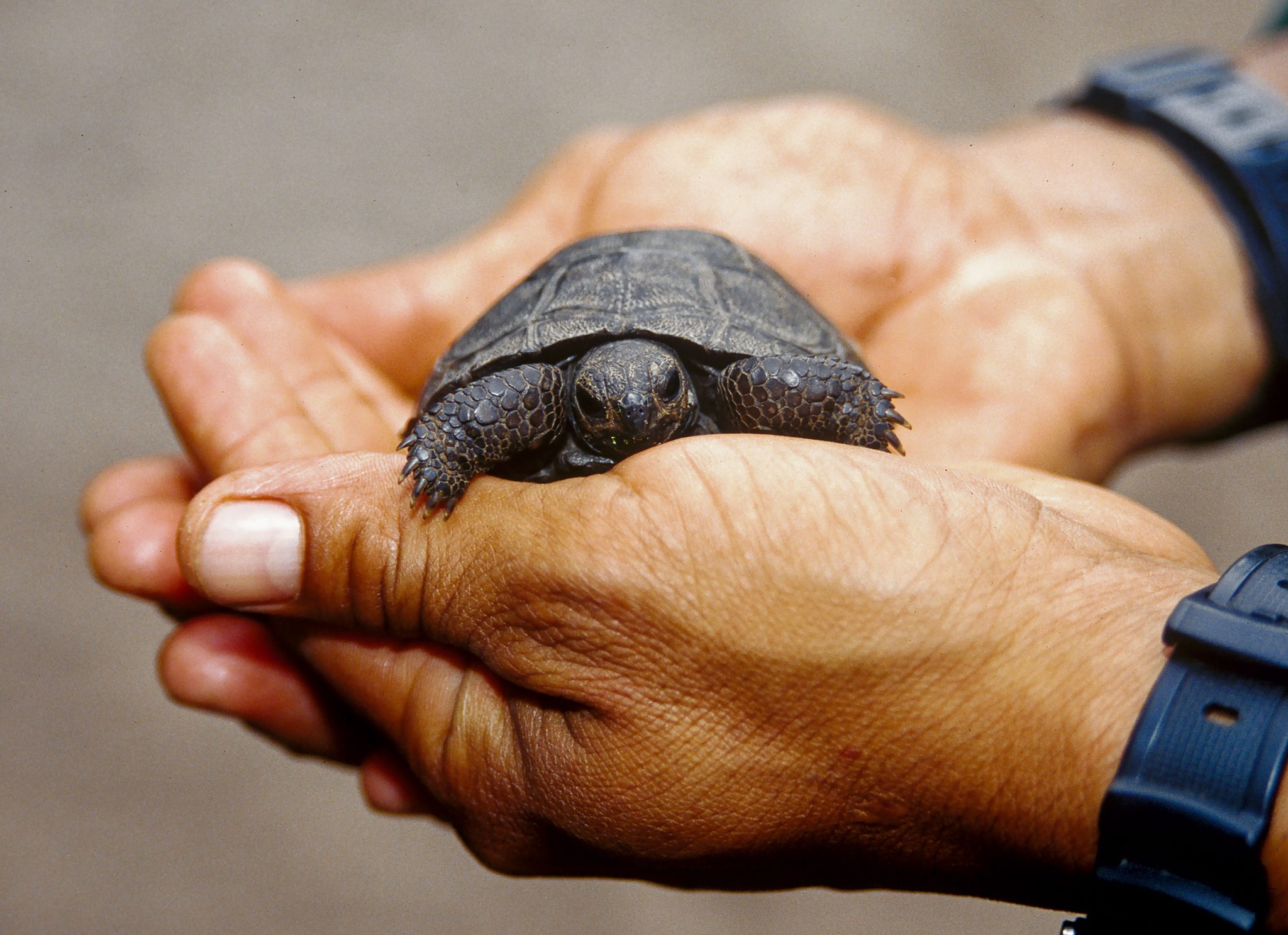
A newly hatched Galápagos tortoise. The eggs of Galápagos tortoises incubate from about 110 to 175 days. The sex of the tortoise is determined by the temperature of the incubation site, with tortoises requiring warmer temperature to become females (Kubisch & Ibargüengoytía, 2020).
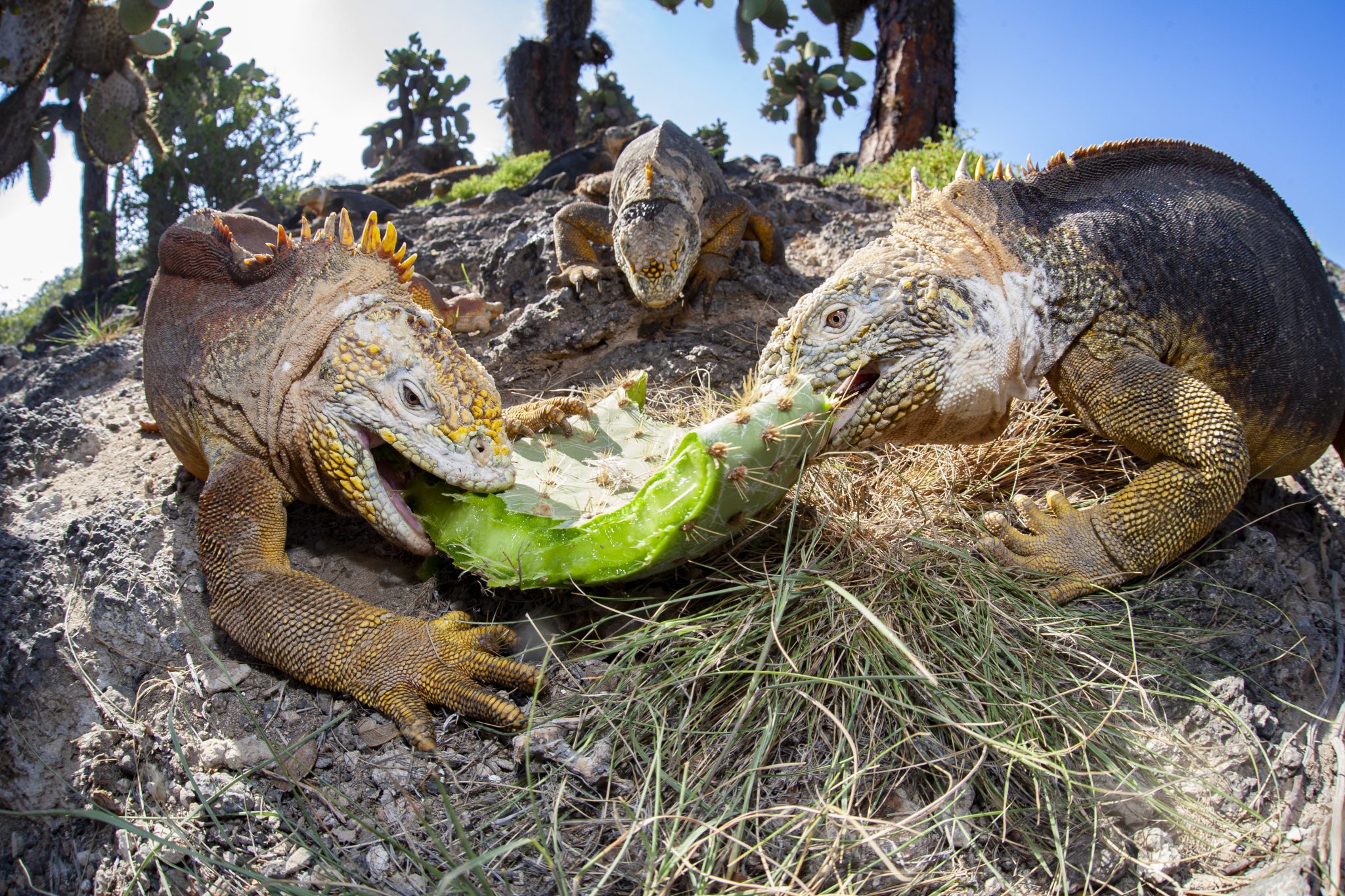
Land iguanas (Conolophus subcristatus) competing for access to a fallen Opuntia cactus pad (Plaza Sur Island).
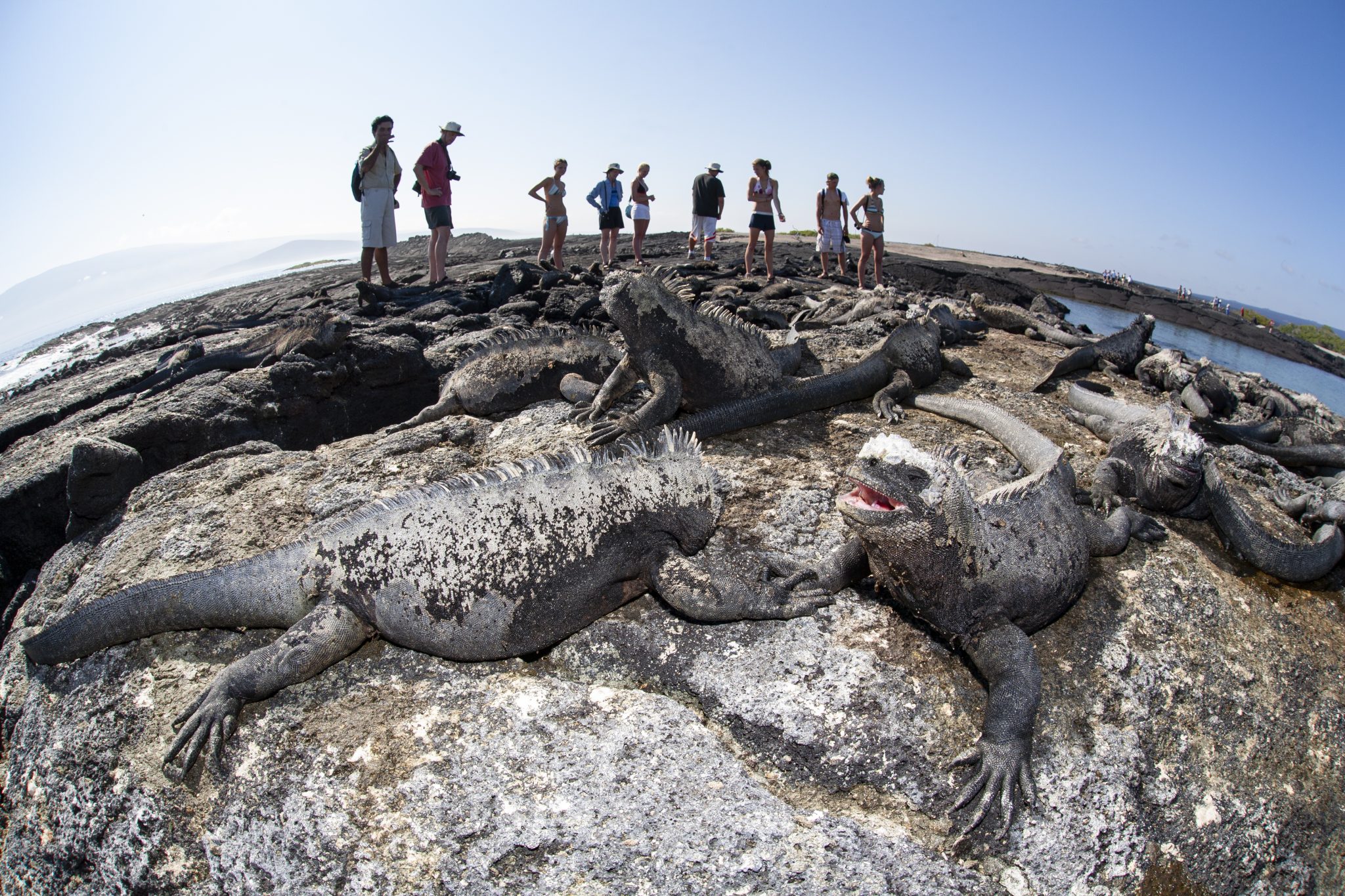
Marine iguanas (Amblyrhynchus cristatus) being observed by a group of tourists at Punta Espinosa (Fernandina Island).
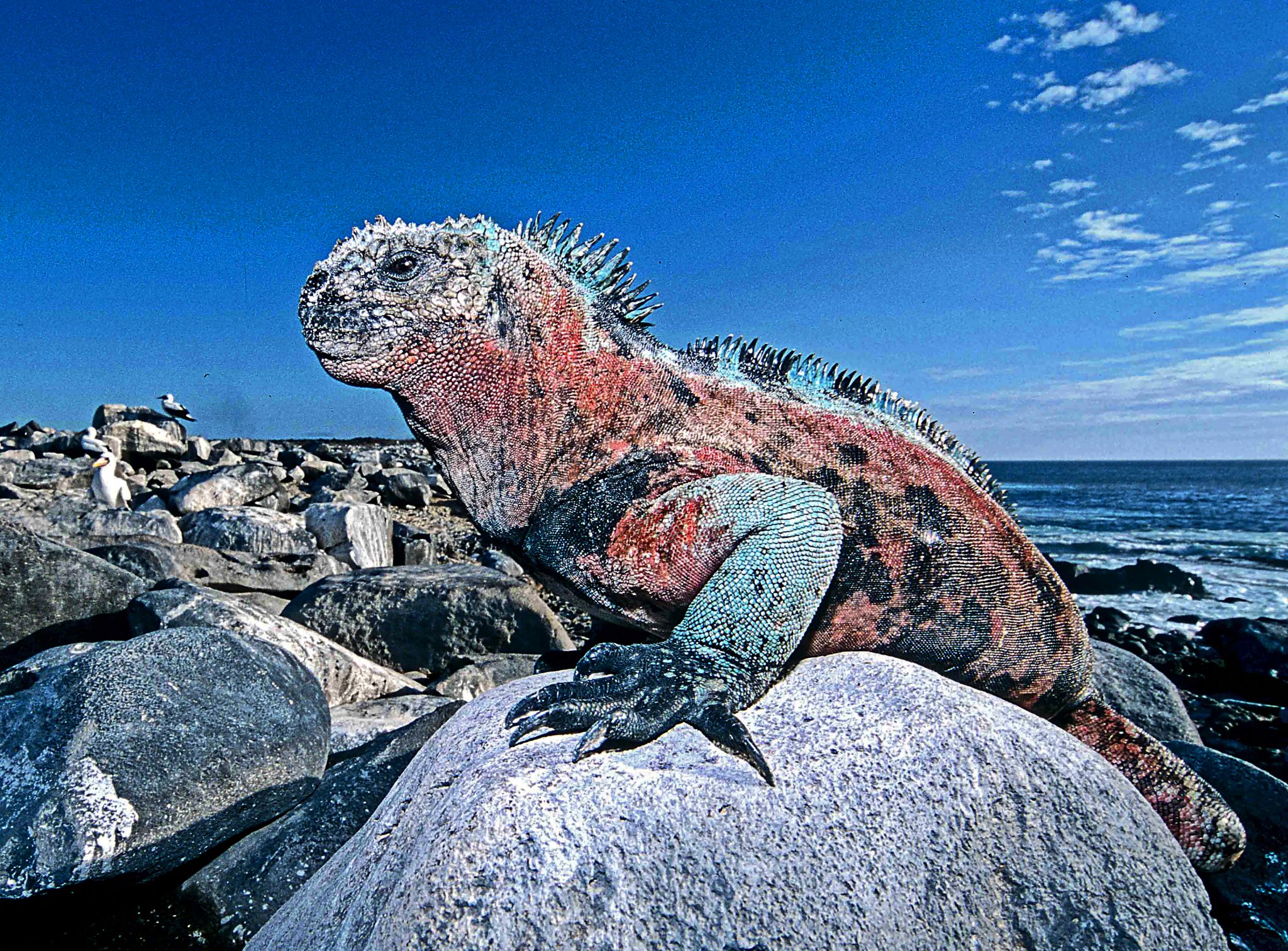
An adult male marine iquana. The bright reddish coloration is typical of males during the breeding season and represents the effects of sexual selection.
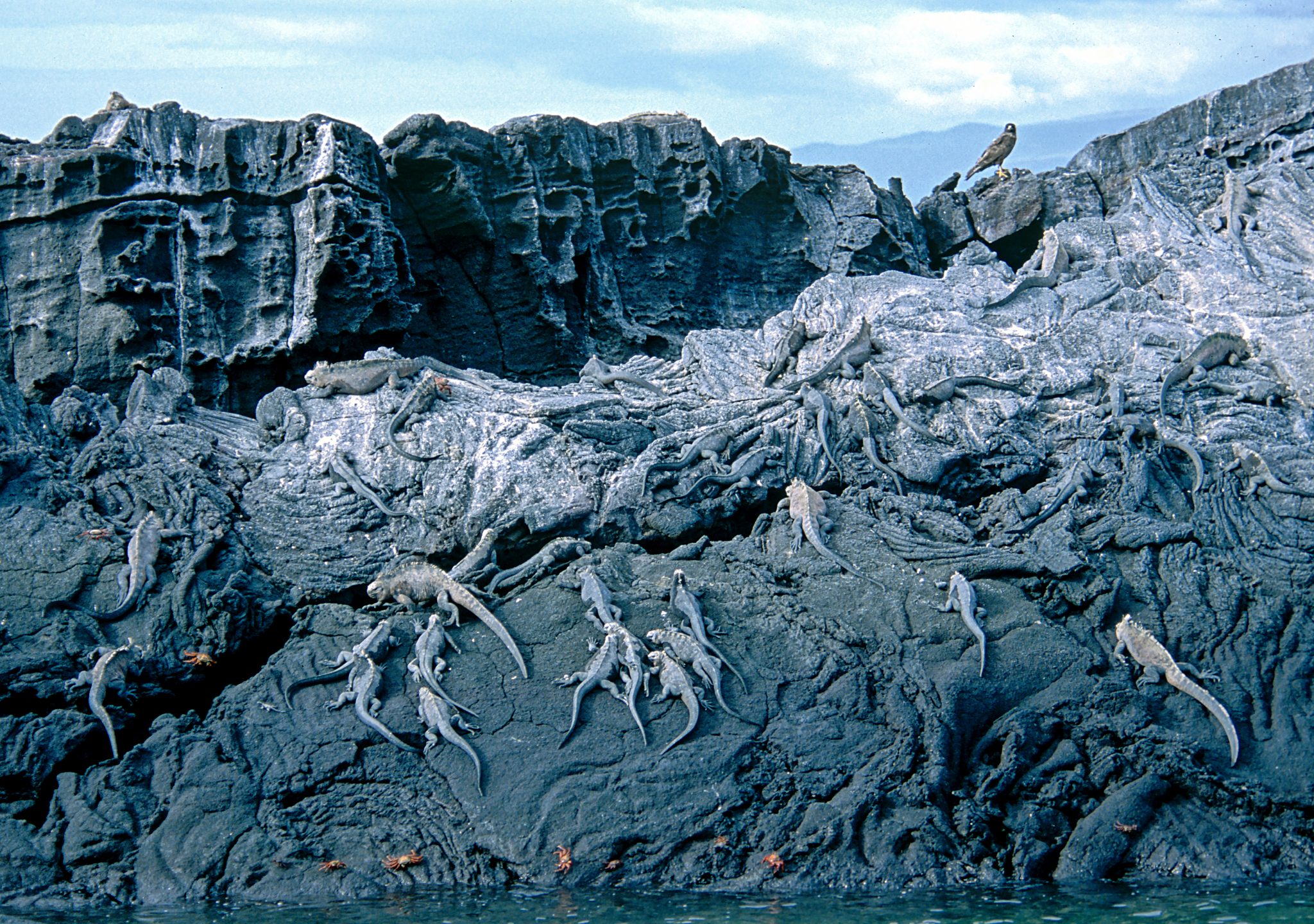
Marine iguanas basking on the lava, to warm their bodies before entering the sea to forage on seaweed. At the top right, a Galápagos hawk appears to be surveying its next meal.