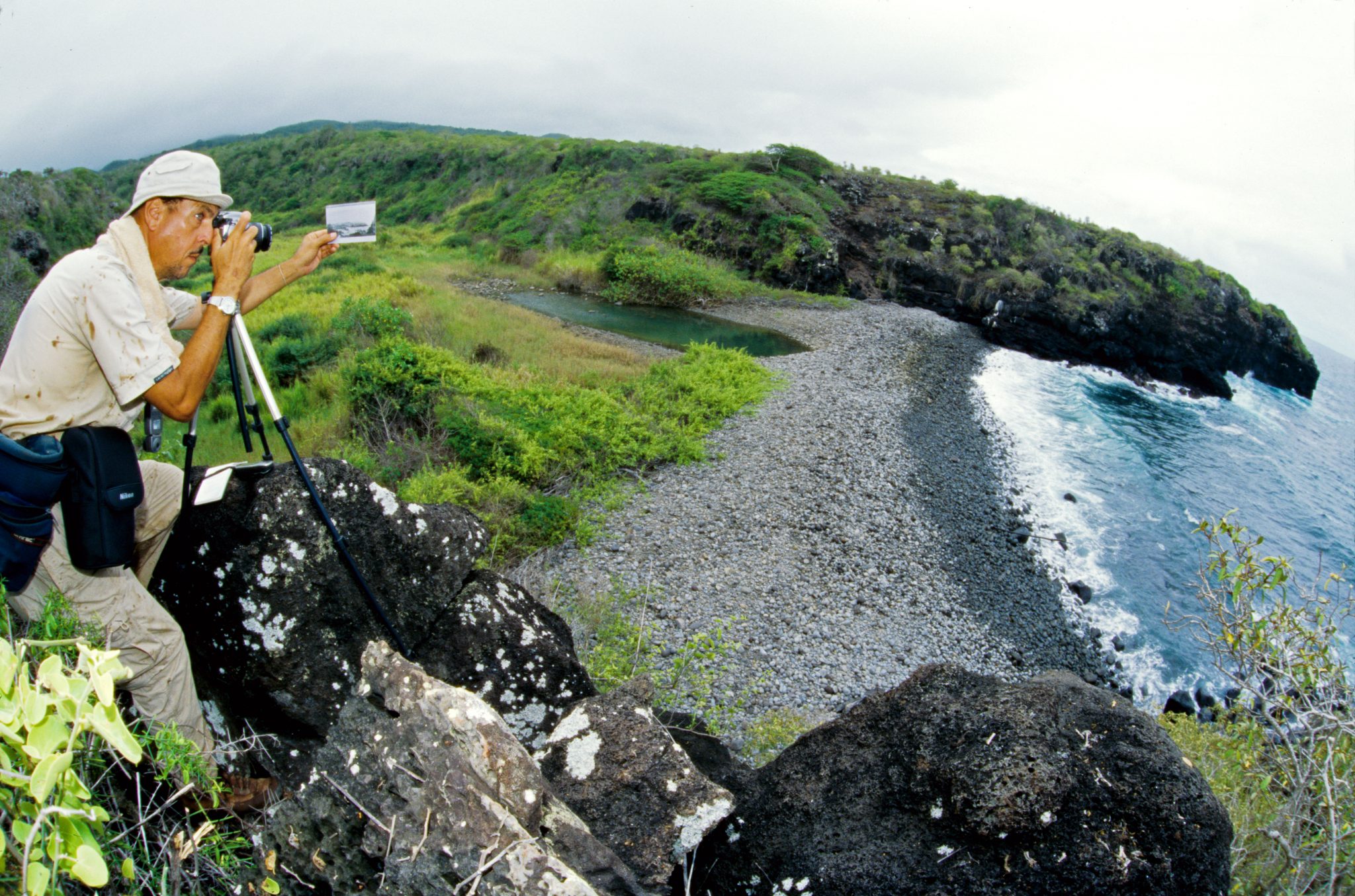
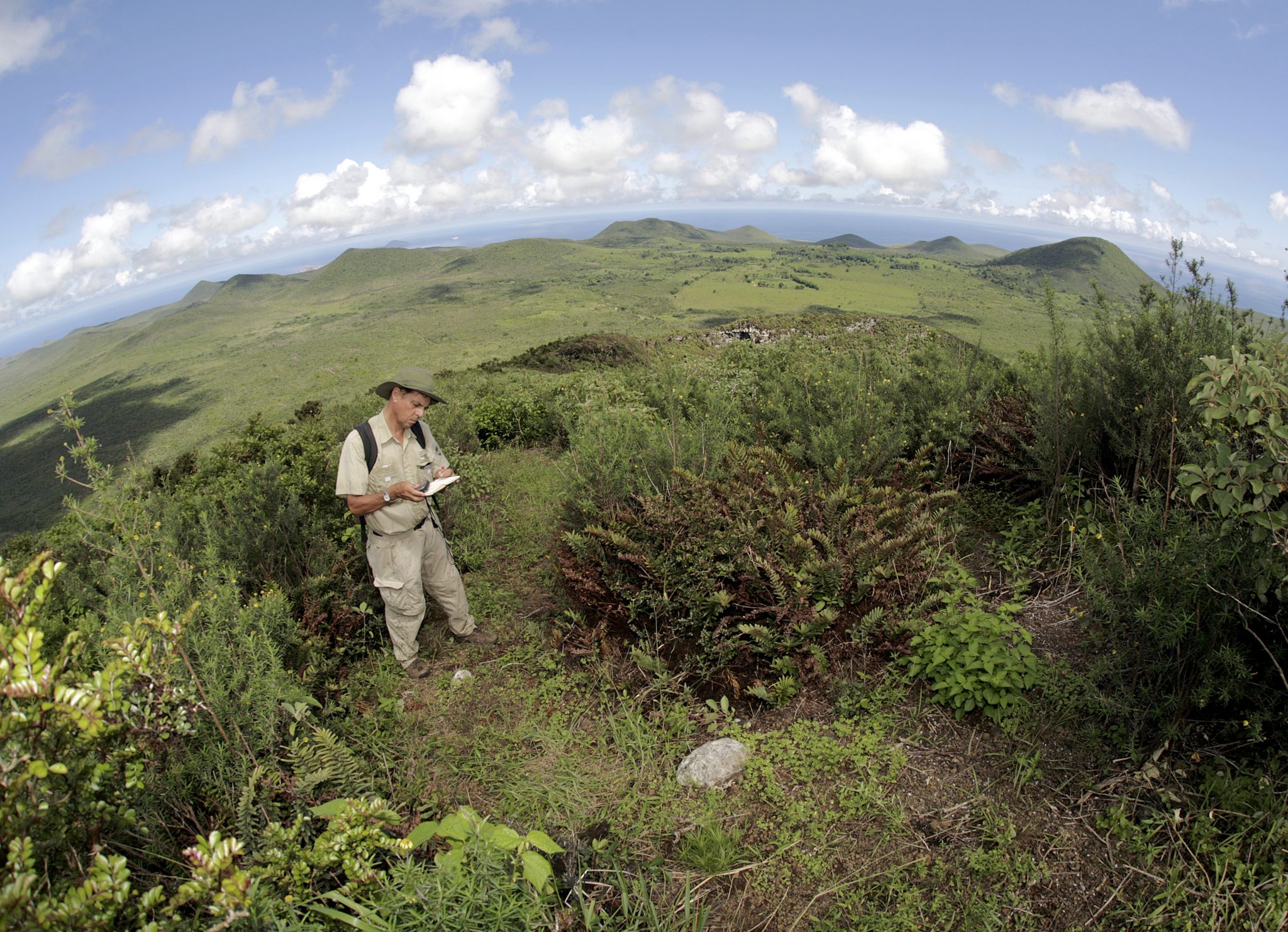
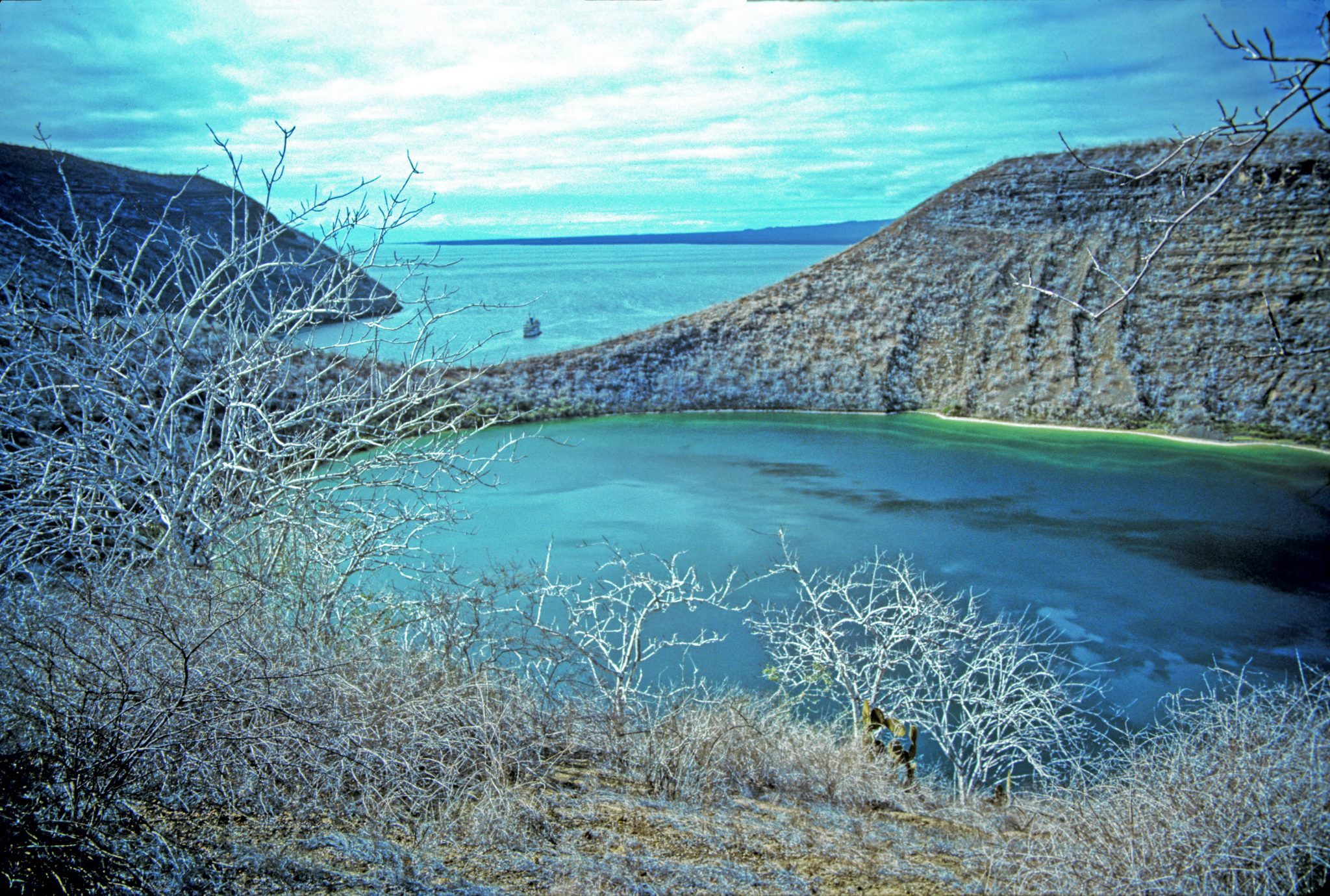
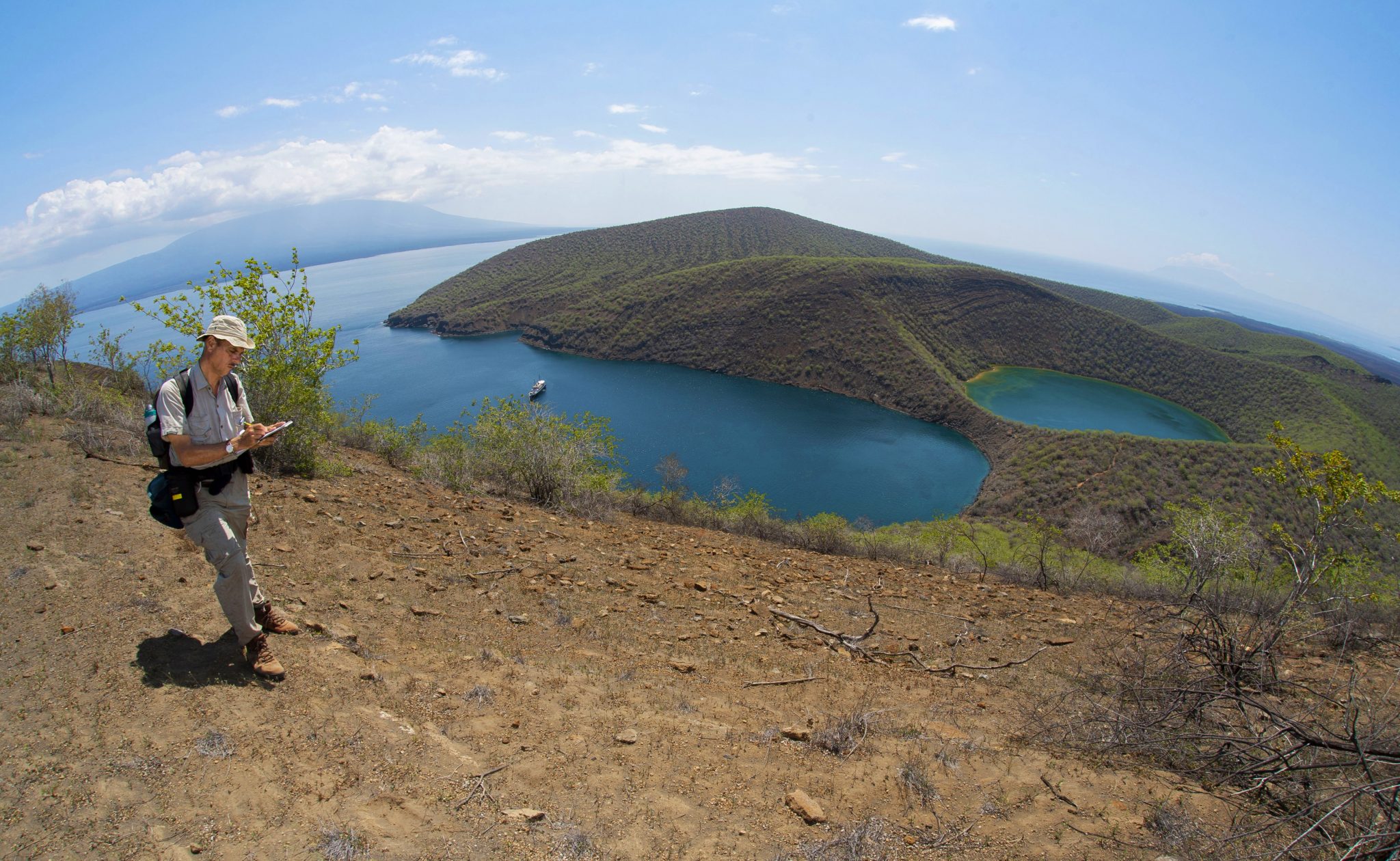
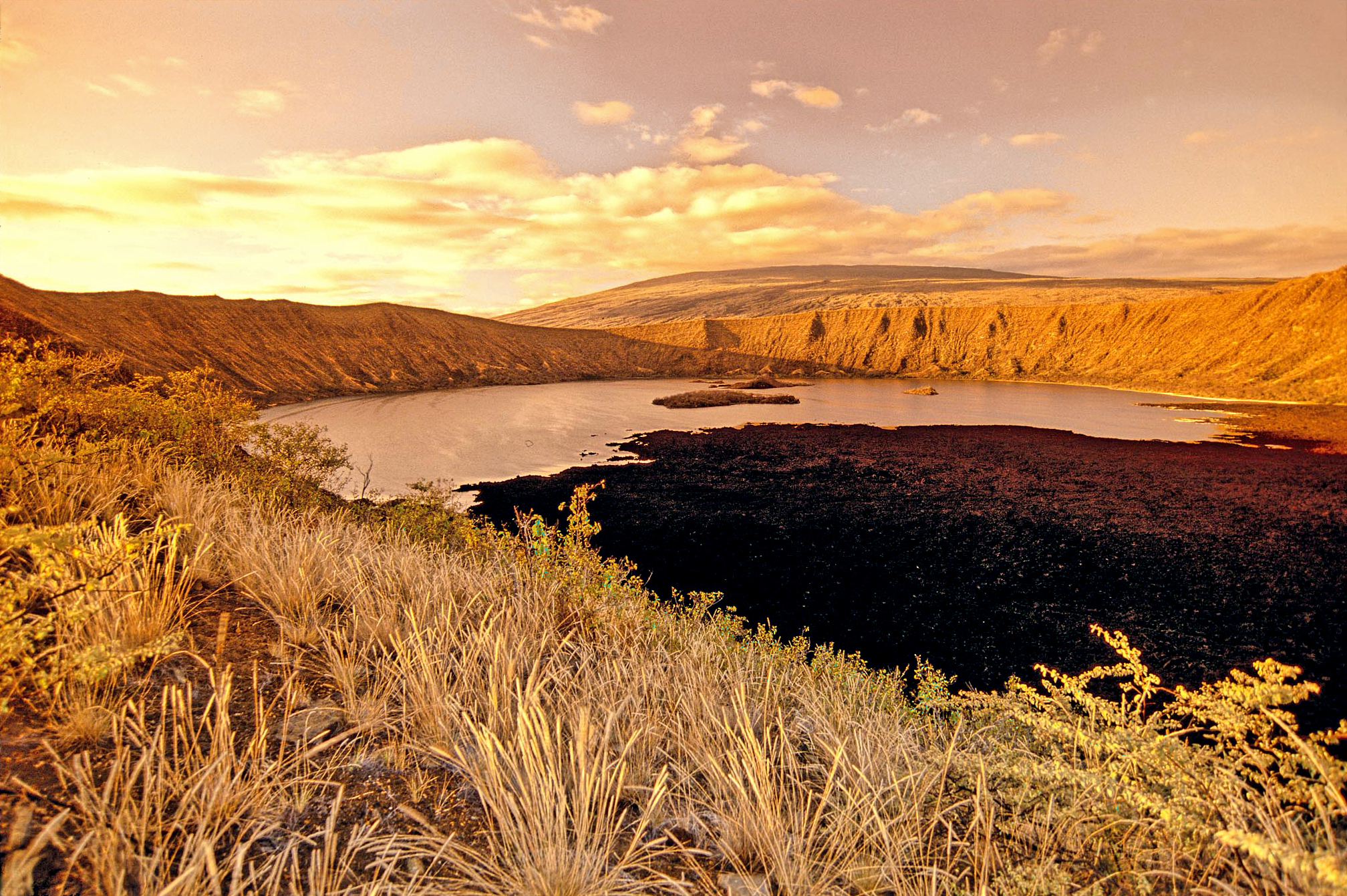
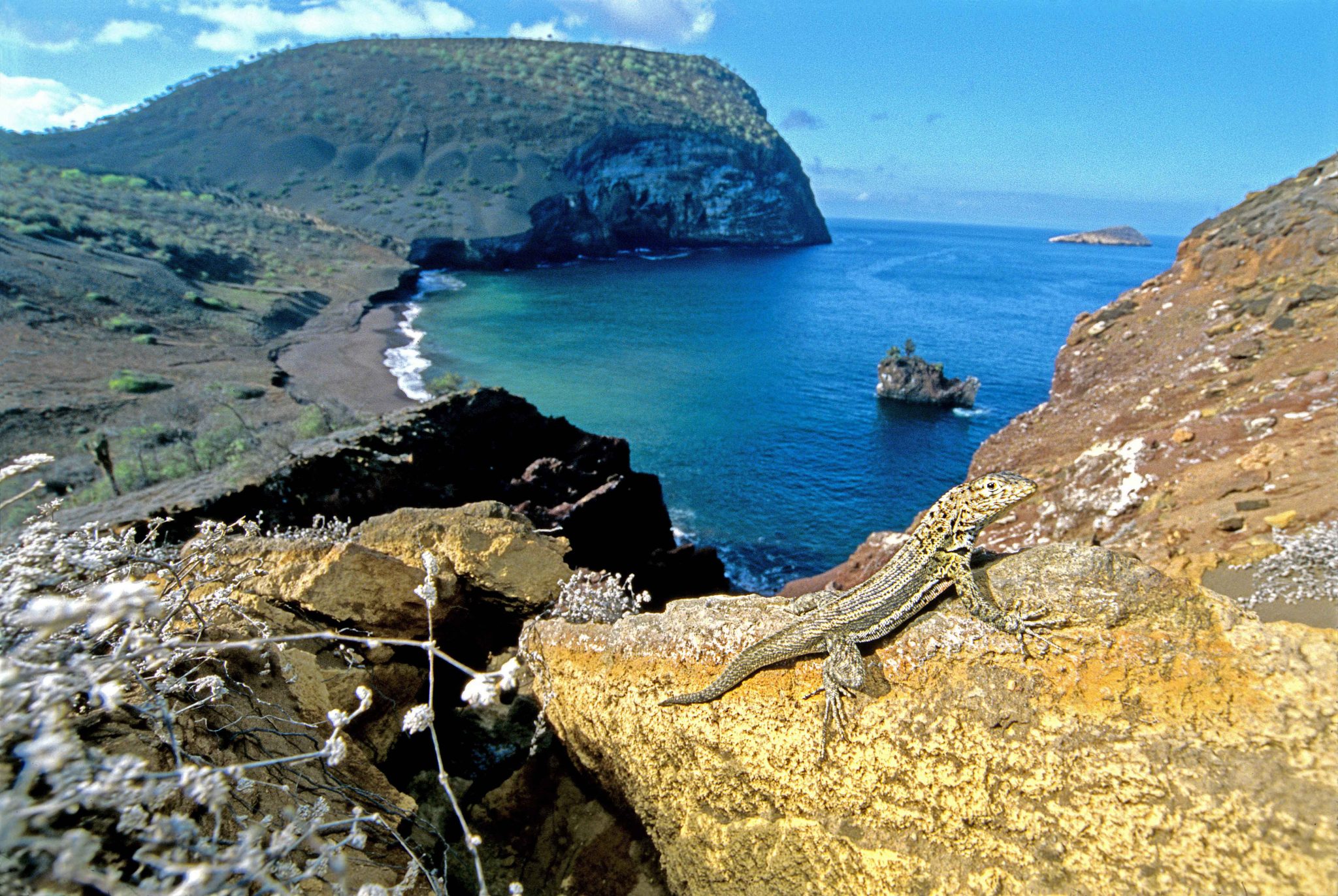
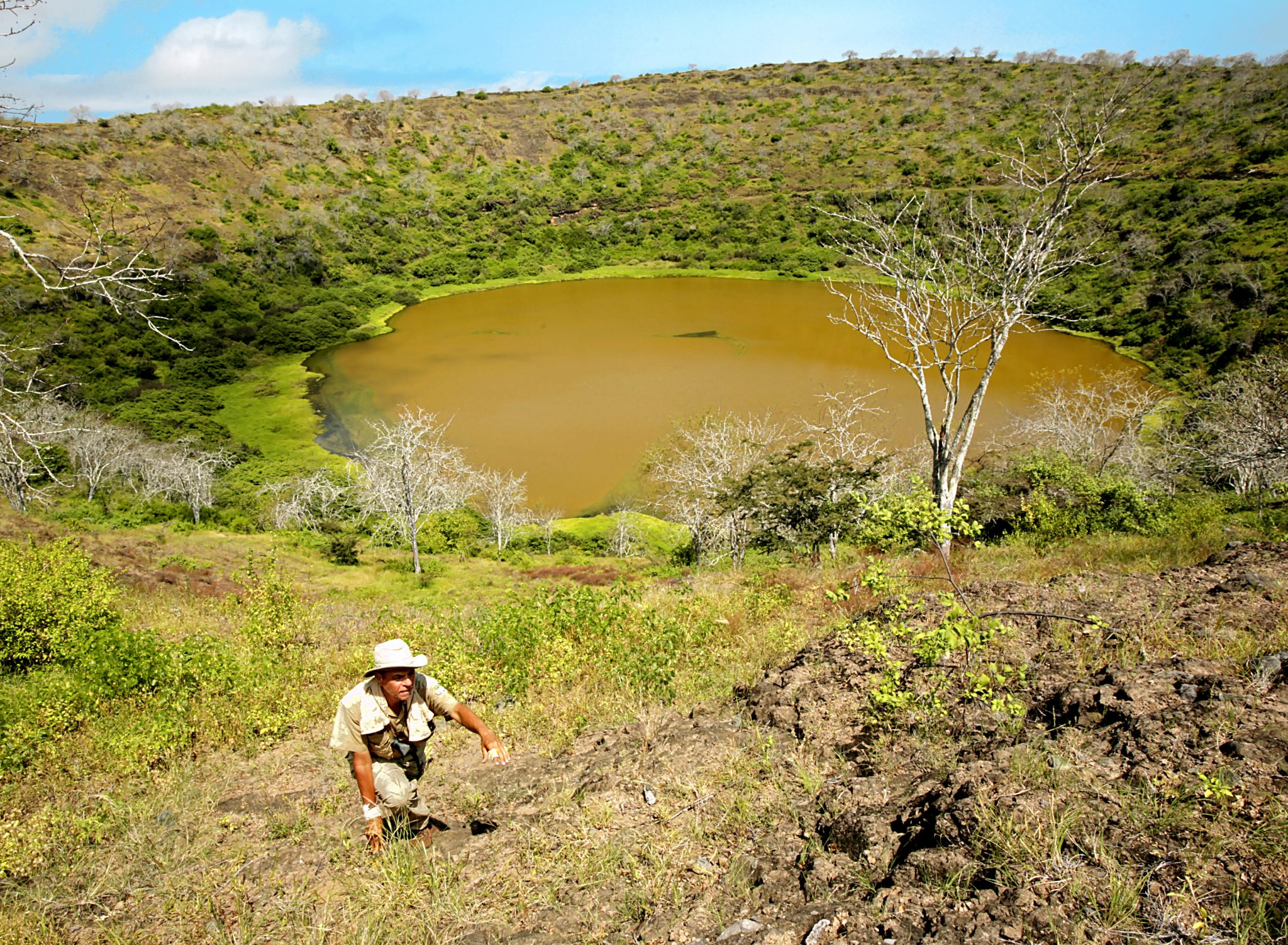
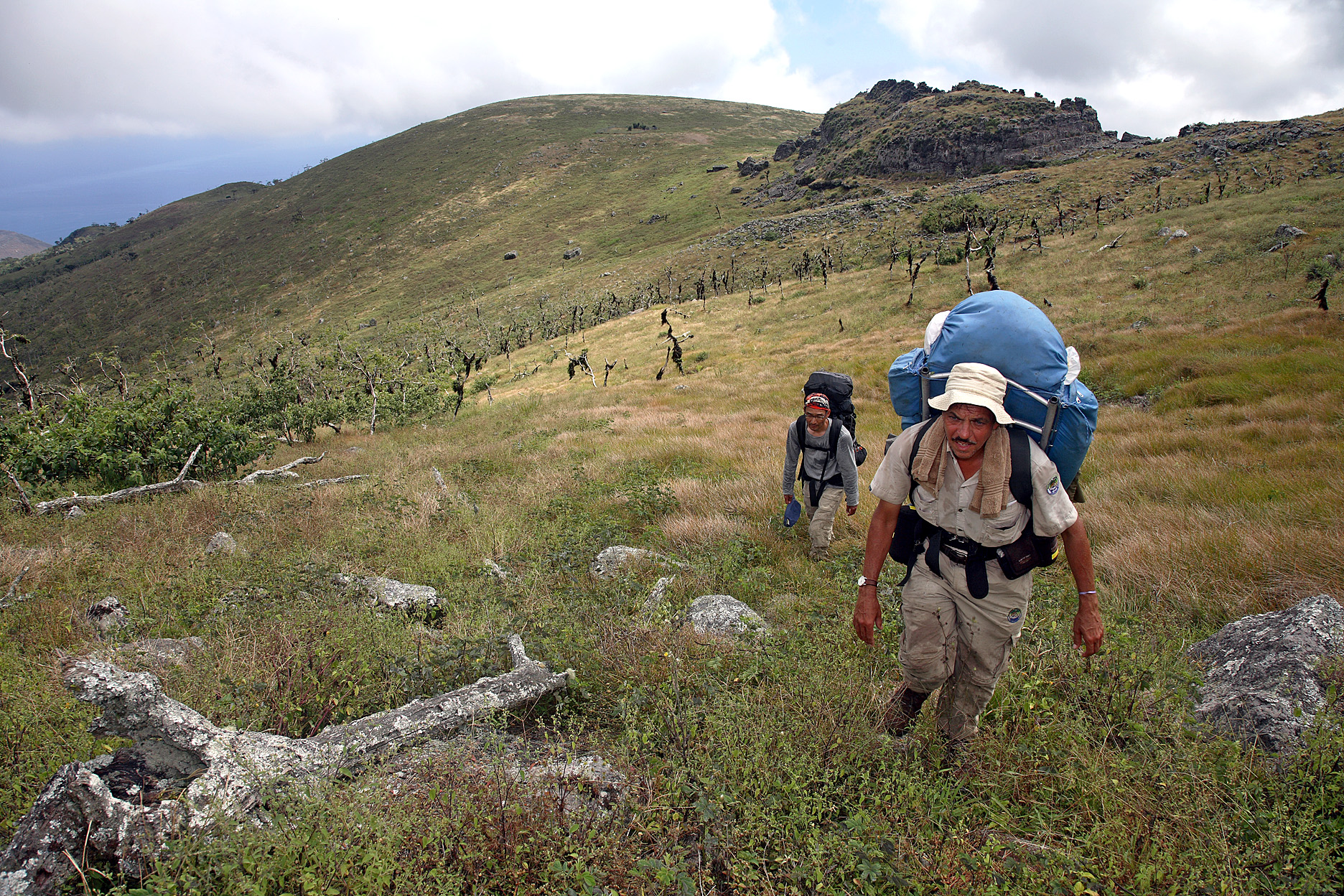
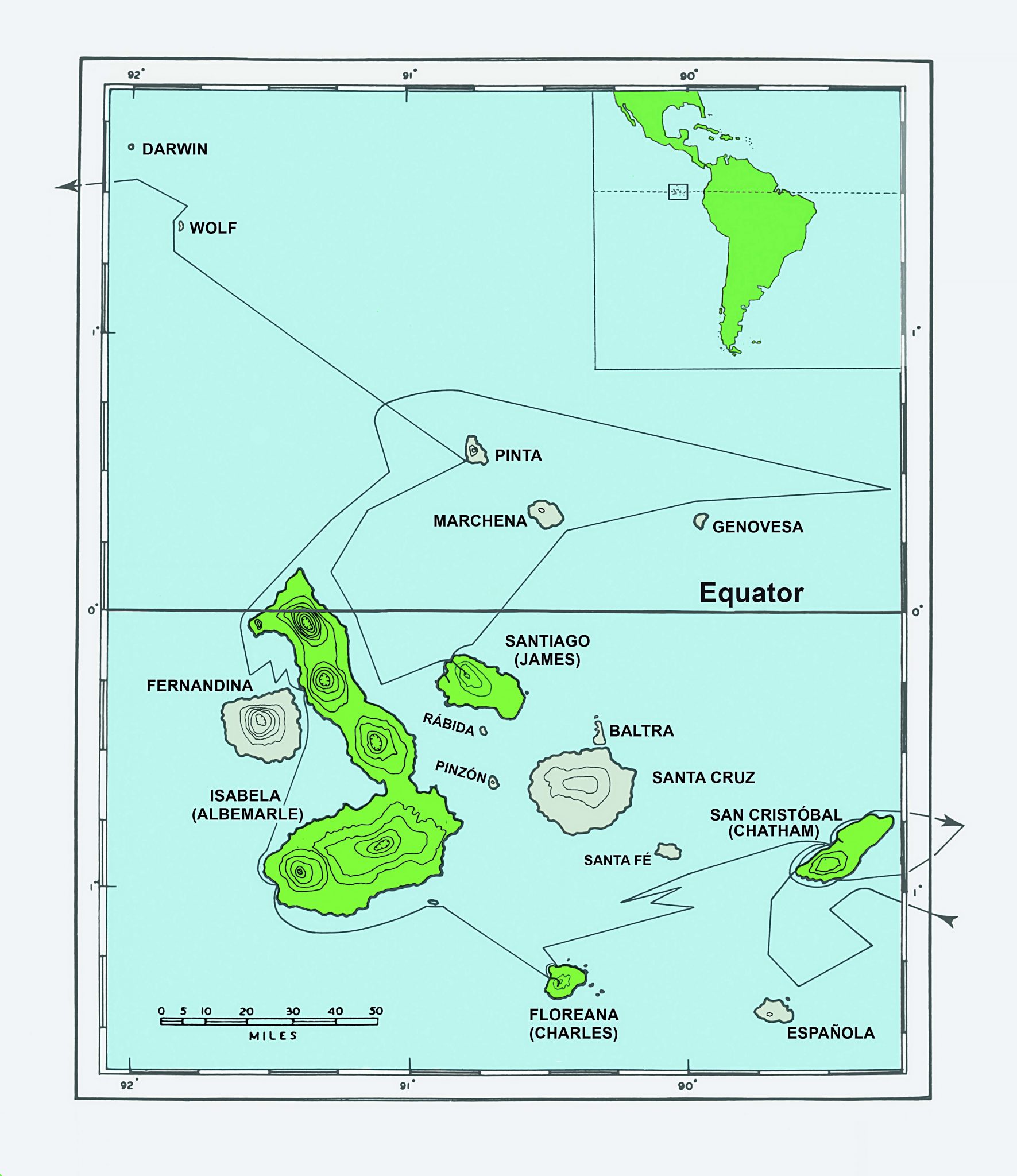
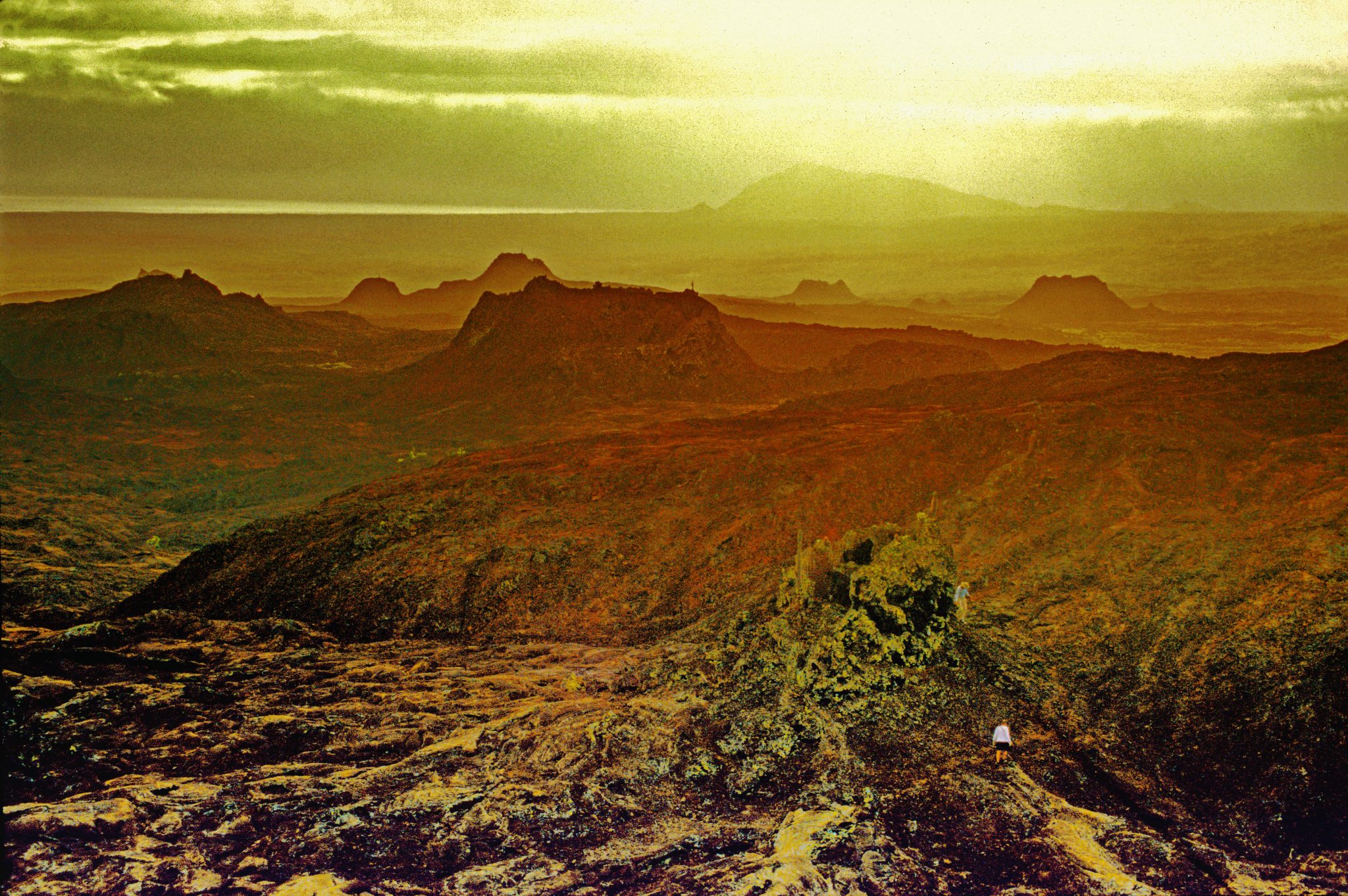
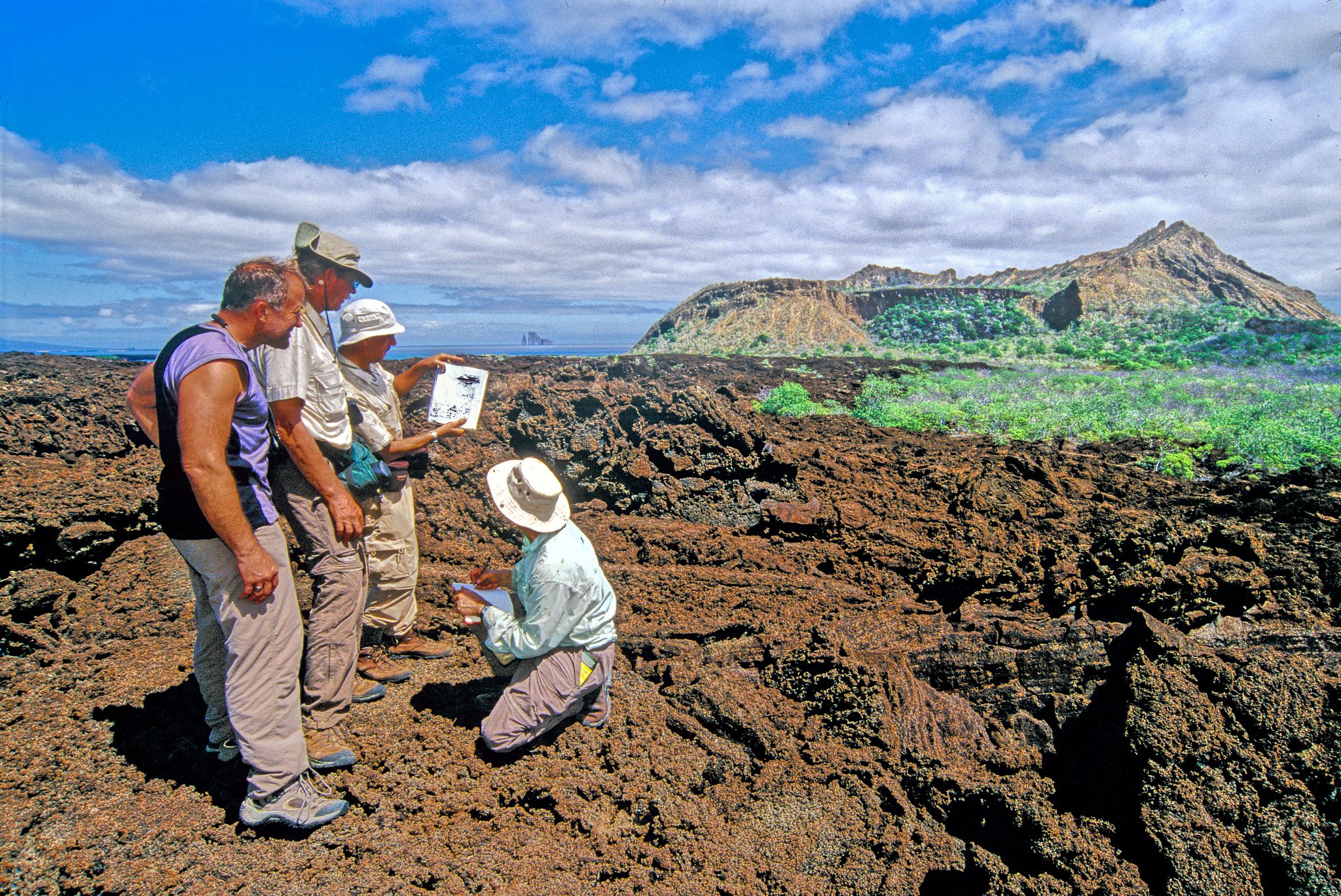
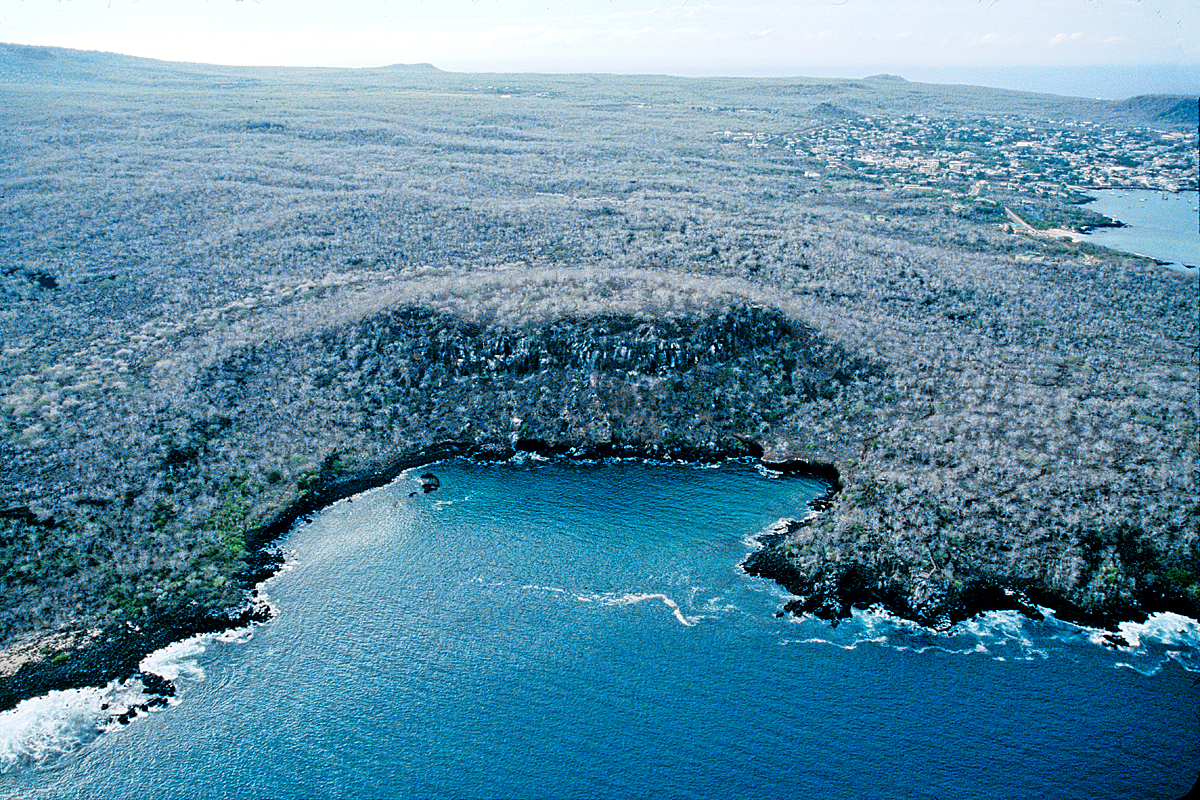
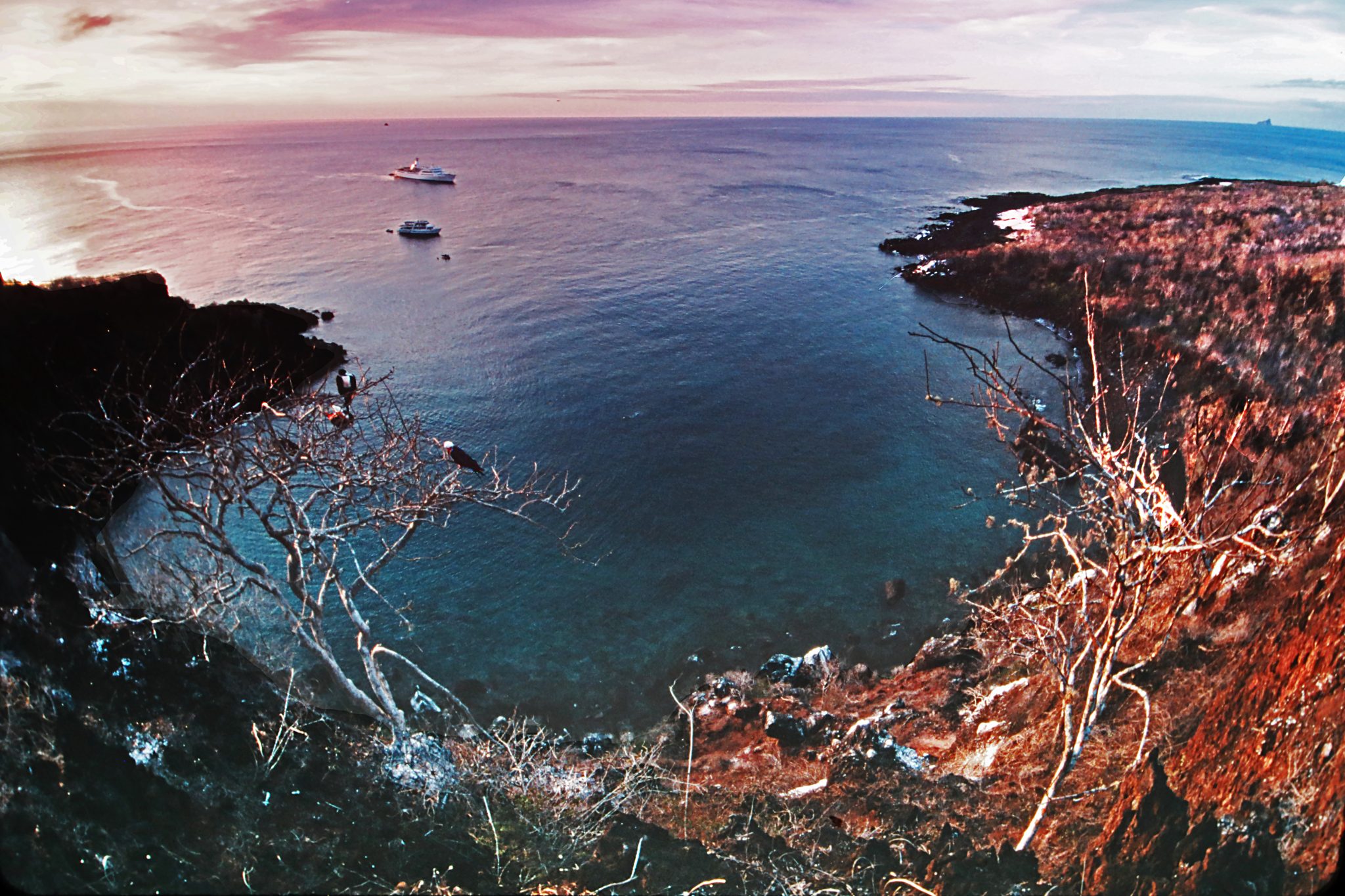
While the rest of the Beagle crew searched for tortoises, Darwin and John Stokes (assistant surveyor on the Beagle), walked inland to this crater (Pan de Azucar) on the northeastern side of San Cristóbal, about a mile from the seacoast, where the Beagle was anchored. In his Beagle "Diary" entry for 18 September 1835, Darwin wrote about this excursion: "We ascended the broken remains of a low but broard [sic] crater. The Volcano had been sub-marine--the strata which dipped away on all sides were composed of hard Sandstones composed of Volcanic dust. . . . The hunting party brought back 15 Tortoises: most of them very heavy & large" (p. 353). Although now extinct on the western side of the island, tortoises can still be found in this northeastern part of the island today.
Darwin's misspelling of "broad" as "broard" is one of a series of words he misspelled during the Beagle voyage, including "neighborhead" and "occassionally." These misspellings, which were corrected by Darwin toward the end of the voyage, sometimes provide invaluable information for dating important and otherwise undated Beagle manuscripts, including Darwin's first explicit statement about the possibility of evolution (Sulloway, 1983).
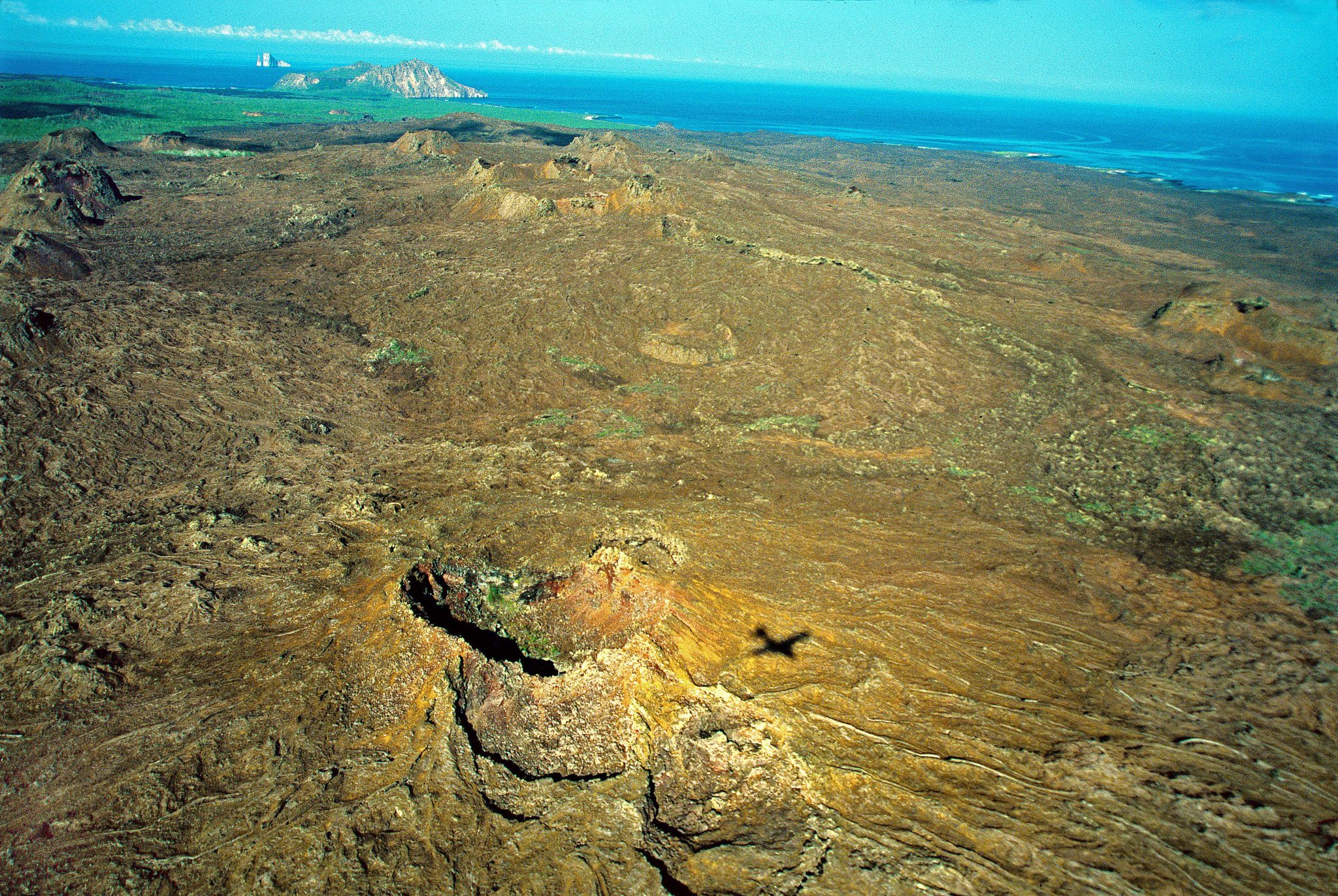
![While the rest of the Beagle crew searched for tortoises, Darwin and John Stokes (assistant surveyor on the Beagle), walked inland to this crater (Pan de Azucar) on the northeastern side of San Cristóbal, about a mile from the seacoast, where the Beagle was anchored. In his Beagle "Diary" entry for 18 September 1835, Darwin wrote about this excursion: "We ascended the broken remains of a low but broard [sic] crater. The Volcano had been sub-marine--the strata which dipped away on all sides were composed of hard Sandstones composed of Volcanic dust. . . . The hunting party brought back 15 Tortoises: most of them very heavy & large" (p. 353). Although now extinct on the western side of the island, tortoises can still be found in this northeastern part of the island today.
Darwin's misspelling of "broad" as "broard" is one of a series of words he misspelled during the Beagle voyage, including "neighborhead" and "occassionally." These misspellings, which were corrected by Darwin toward the end of the voyage, sometimes provide invaluable information for dating important and otherwise undated Beagle manuscripts, including Darwin's first explicit statement about the possibility of evolution (Sulloway, 1983).](https://darwinbear.com/wp-content/uploads/2021/09/PandeAzucarFromAir2004a_Adj2-2048x1416.jpg)