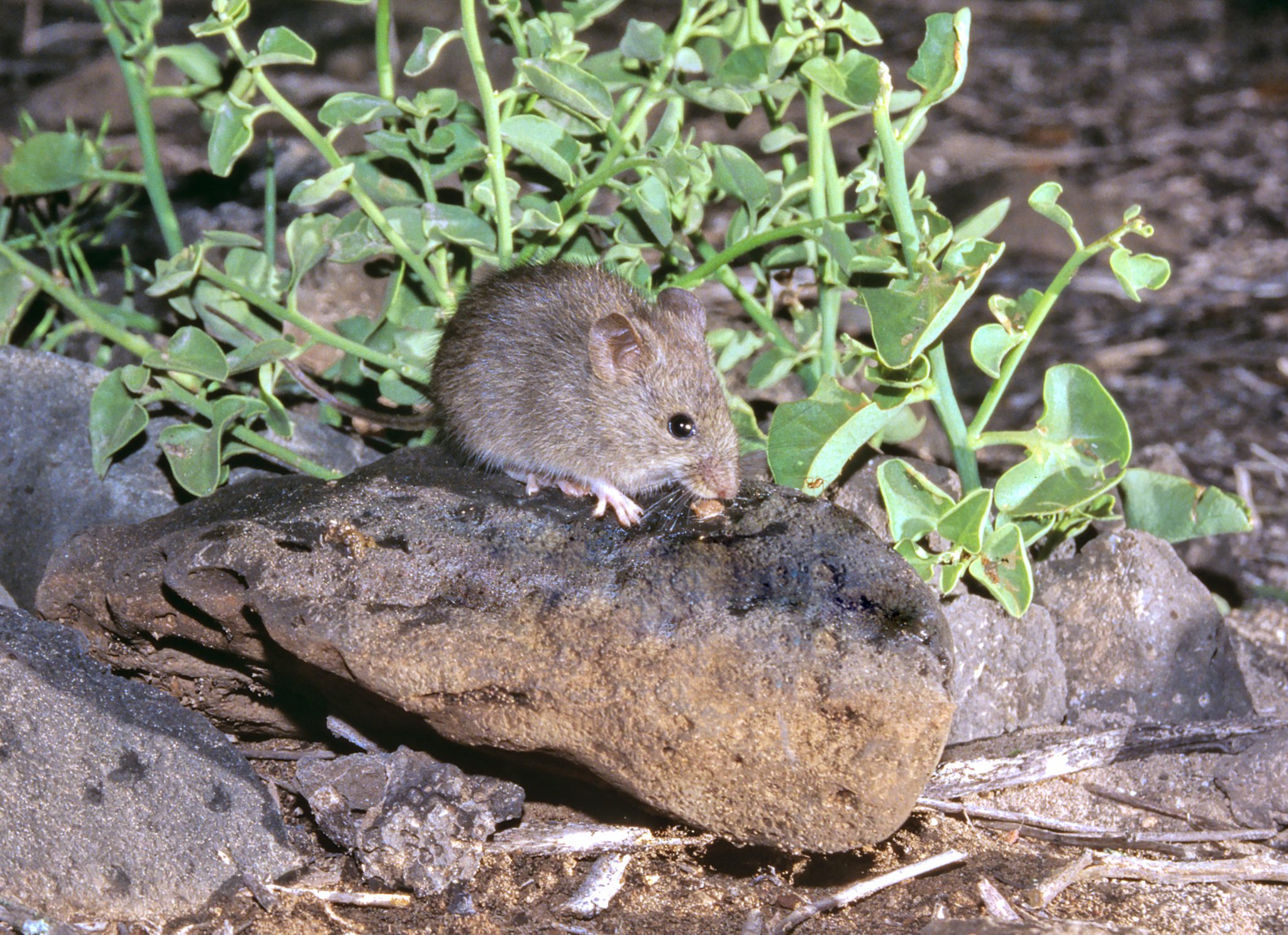
A Galápagos rice rat (Aegialomys galapagoensis) on Santa Fe Island. Like birds and many other animals in the Galápagos, rice rats are extraordinarily tame and fearless. They are attracted to researchers' campsites at night and can easily jump vertically three feet or more to obtain food at the campsite. At night it is necessary to keep one's tent open, as otherwise the rice rats gnaw through the tent material to get in. Rice rats hold the world's record for the longest dispersal over open ocean by a quadruped (about 600 miles or 1,000 km).
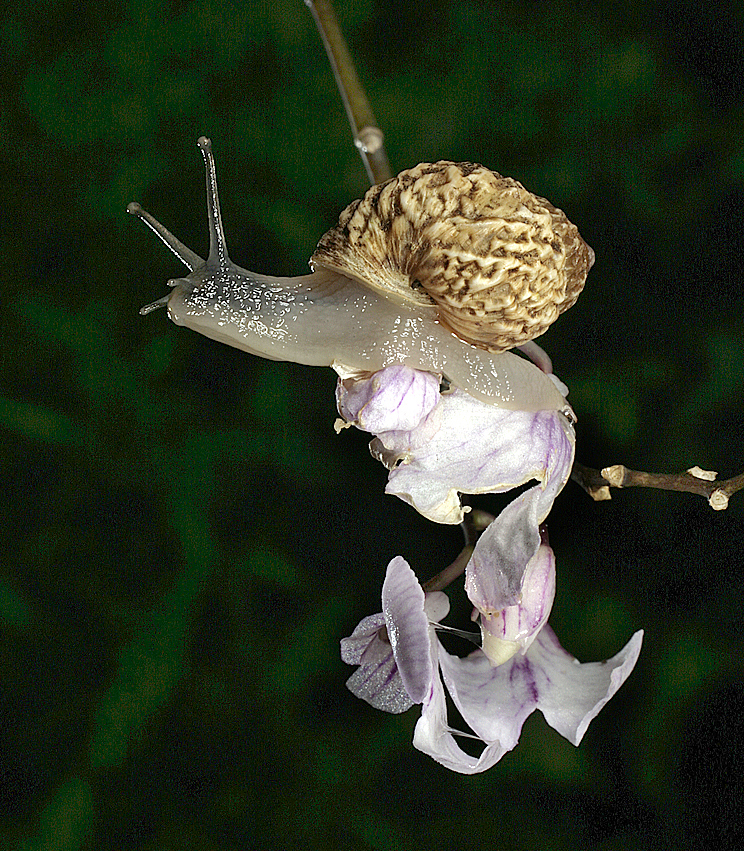
A Galápagos land snail (Bulimulus darwini) from the highlands of Santiago. From
a single ancestral species that colonized the Galápagos several million years ago, nearly 80 species of land snails have evolved in the these islands, dwarfing the number of species that have undergone adaptive radiation in other Galápagos taxa, including Darwin’s finches (17 species), giant land tortoises (between 13 and 16 species), Opuntia (6), and Scalesia (15). For further information about this remarkable example of adaptive radiation, see Parent and Crespi (2006).
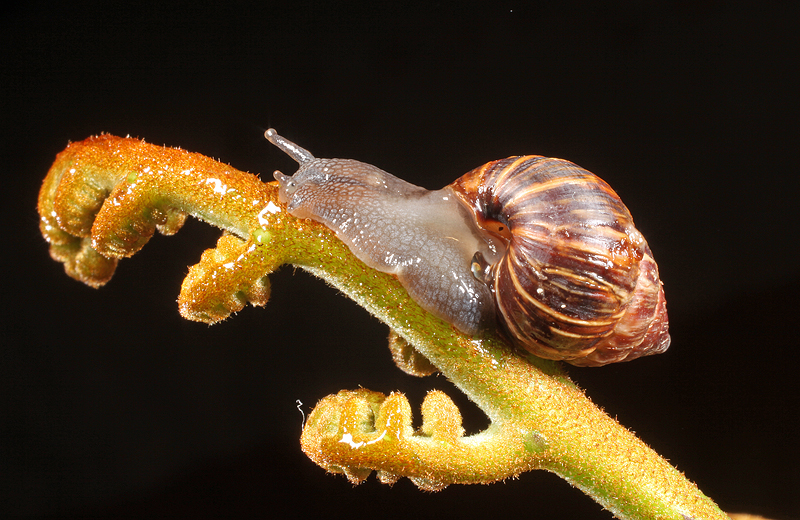
Another species of landsnail (Bulimulus nux), this one from San Cristóbal.
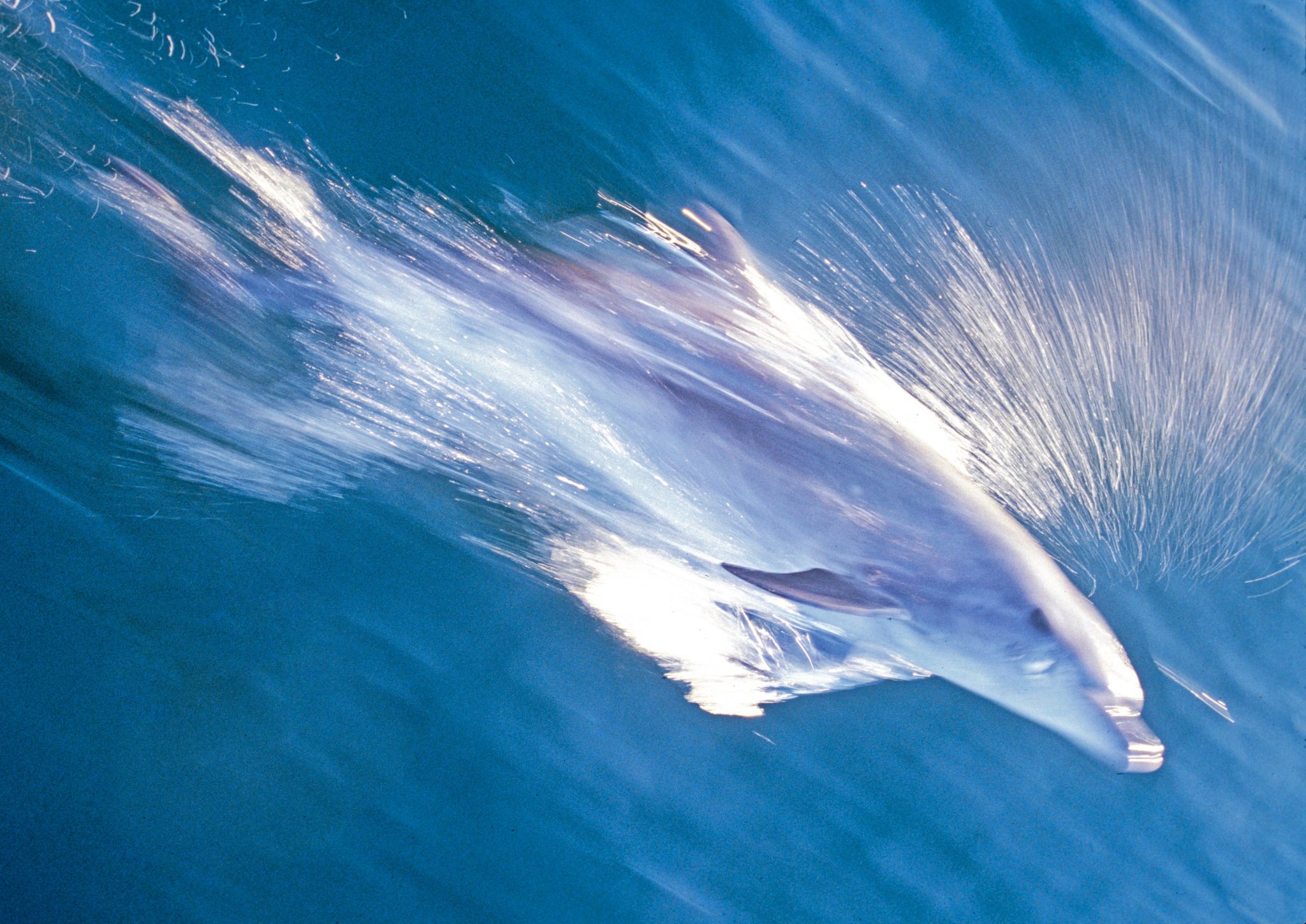
A bottle-nose dolphin (Tursiops trunacatus). This is the most common of the five species of dolphins that are found in the Galápagos Islands.
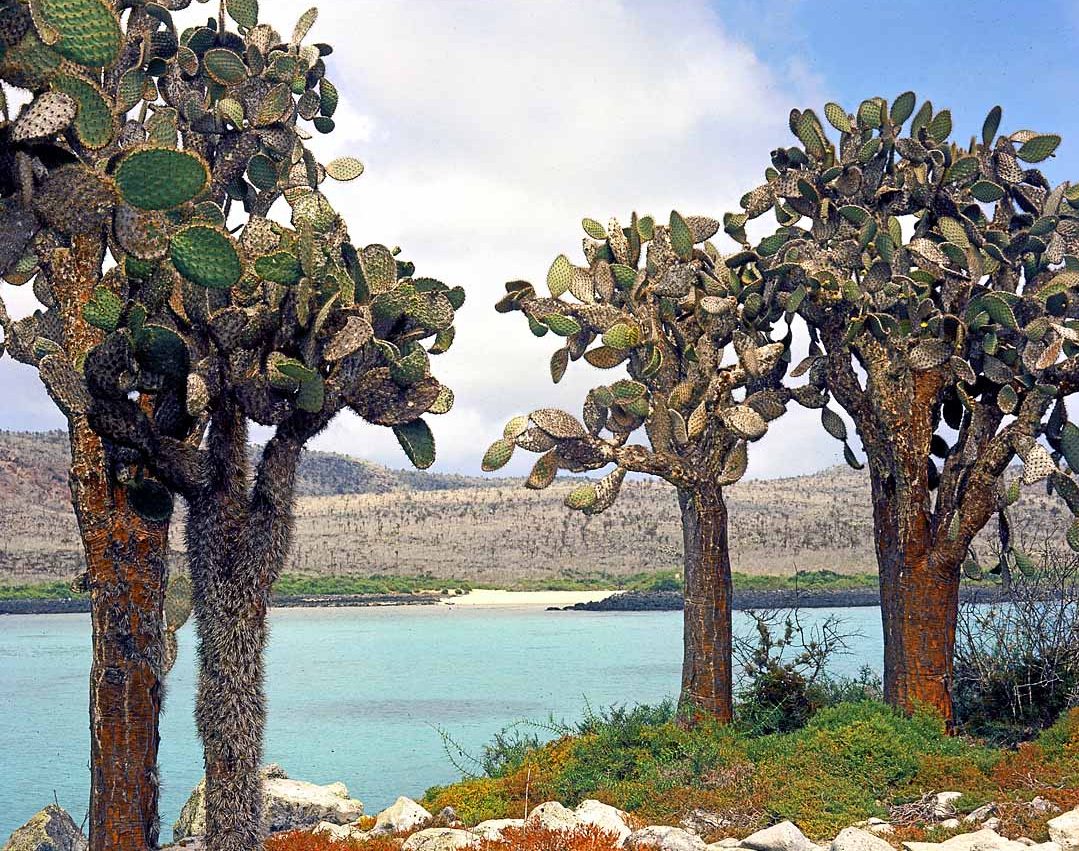
Giant tree Opuntia (Opuntia echios var. barrintonensis) on a small island just off the northeastern corner of Santa Fe, which can be seen in the background.
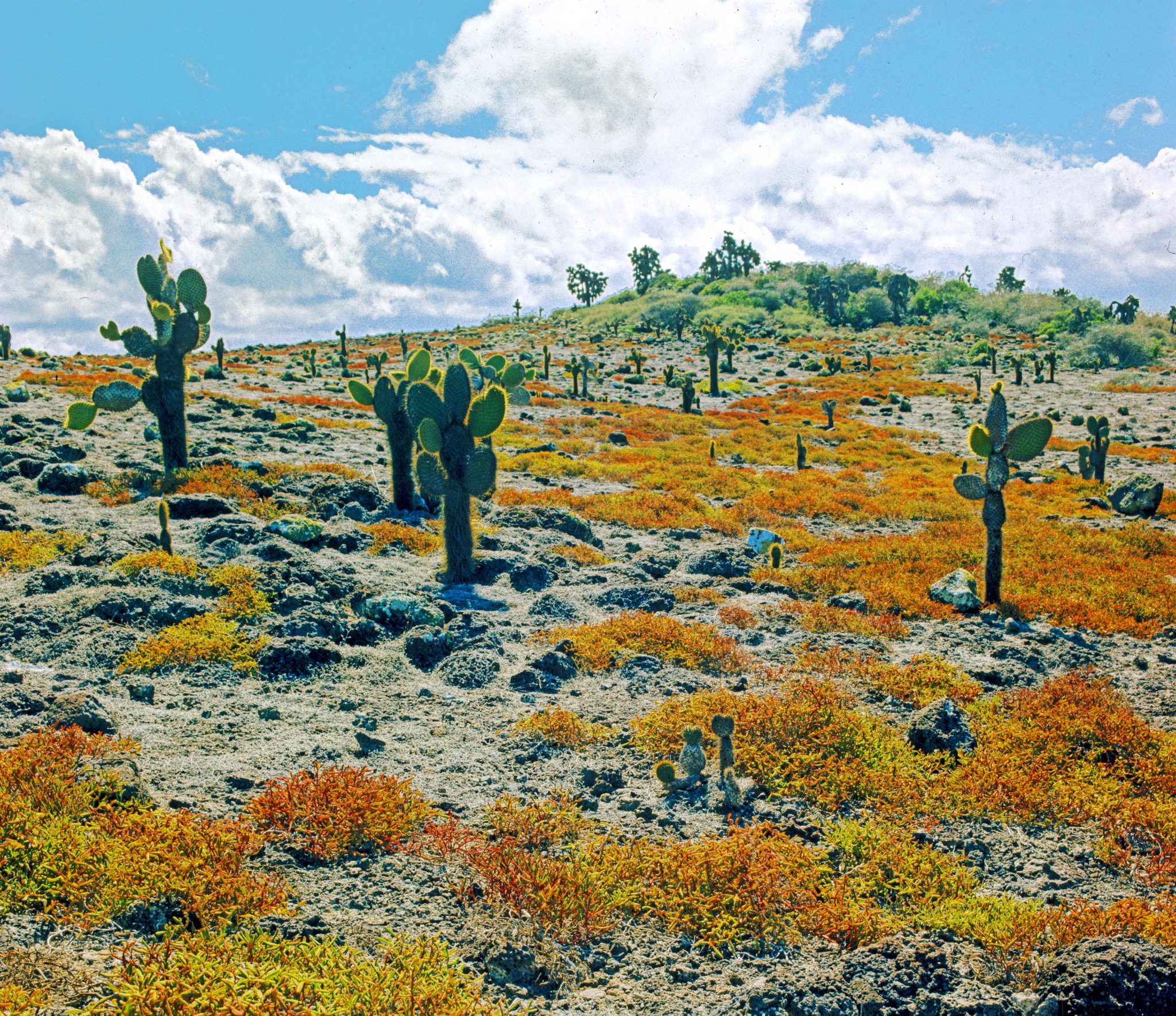
I took this large-format photograph of the red carpet weed (Sesuvium edmonstonei) and tree Opuntias (O. echios var. echios) on South Plaza in 1970, and the photo later became part of my long-term study of Opuntia loss on this island when I realized that there had not been a single new cactus in the area shown in the photograph, or in many other photos taken during my 1970 visit, over the next three decades. Each of the cacti visible in this photograph, and nearly a thousand others, were subsequently assigned unique numbers, and their fates were then followed over time, using evidence derived from repeat photography from 1970 to the present (Sulloway, 2015). Approximately half of the tree Opuntias visible in this photograph have died, either from old age or from the deleterious effects of El Niños. Based in part on my own team's research, the Galápagos Verde 2050 Project, under the leadership of Patricia Jaramillo, has reforested much of this island over the last decade.
A stand of young tree Opuntia, on the eastern coast of Santa Cruz Island near Cerro Colorado, with Plaza Norte as well as Plaza Sur visible in the background.
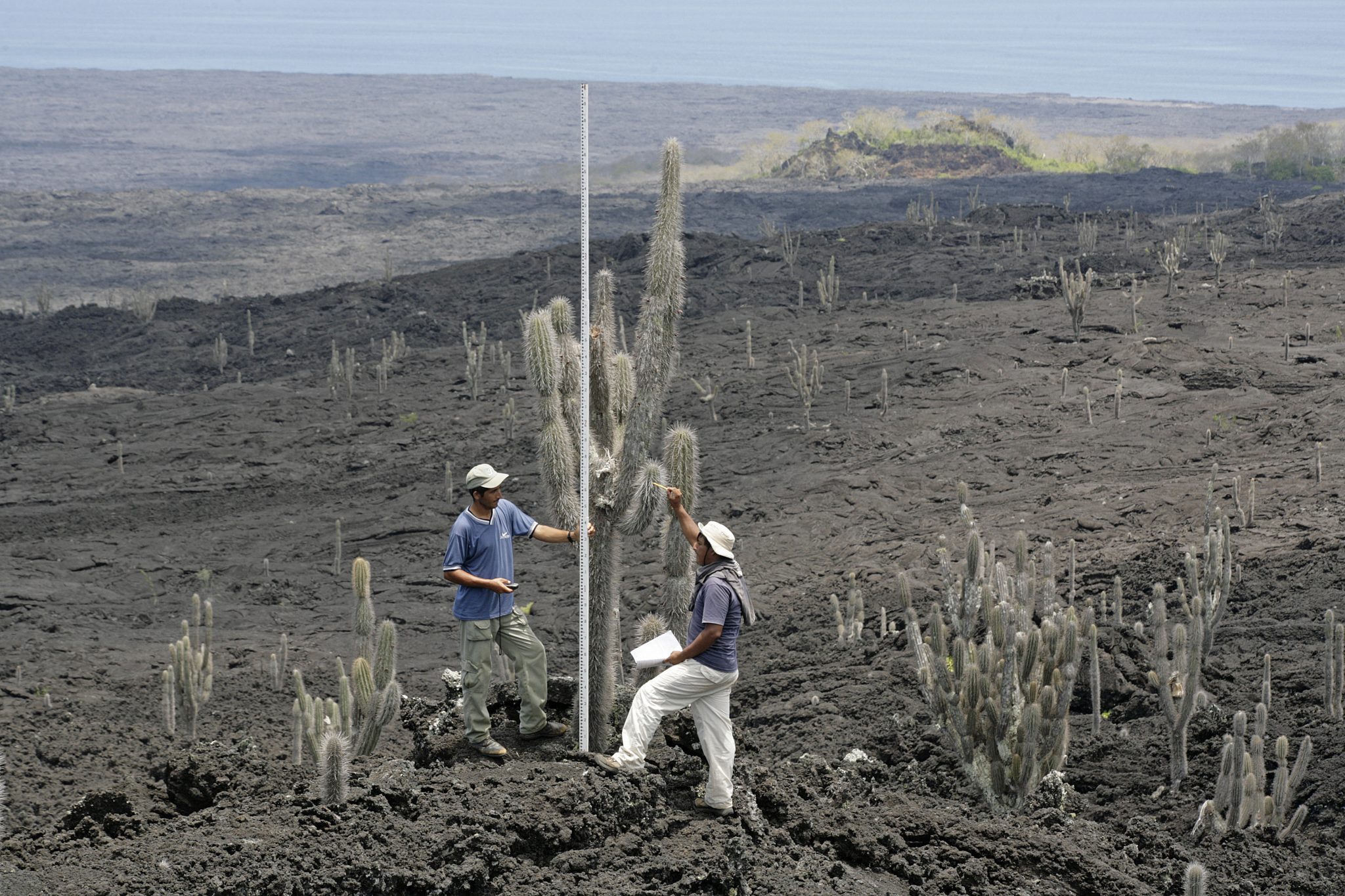
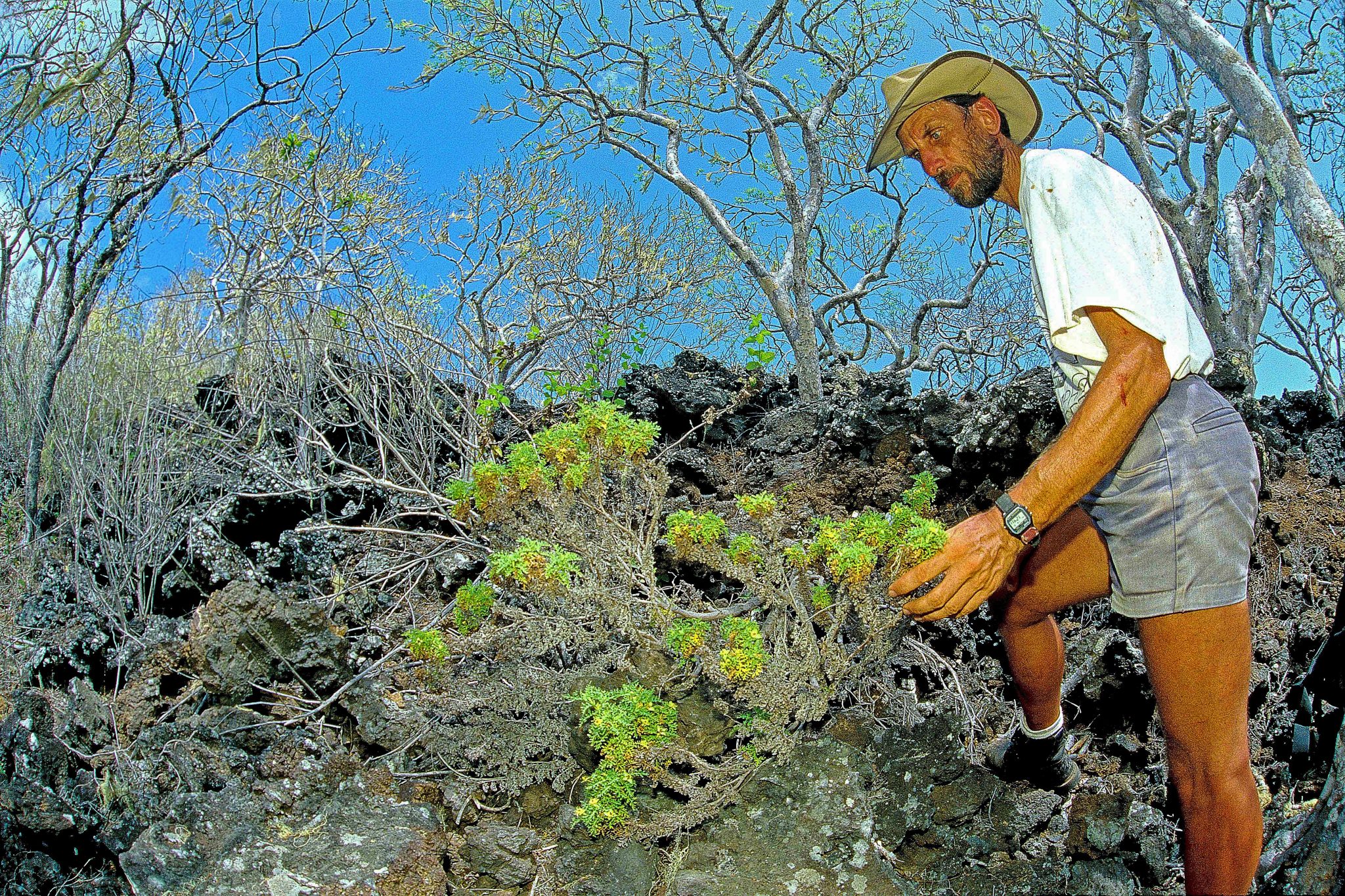
Two members of my research team (Freddie Cabrera and Miguel Sangroquiza) measuring Jasminocereus cacti on a large lava flow on the western side of Santiago, near Puerto Egas (James Bay).
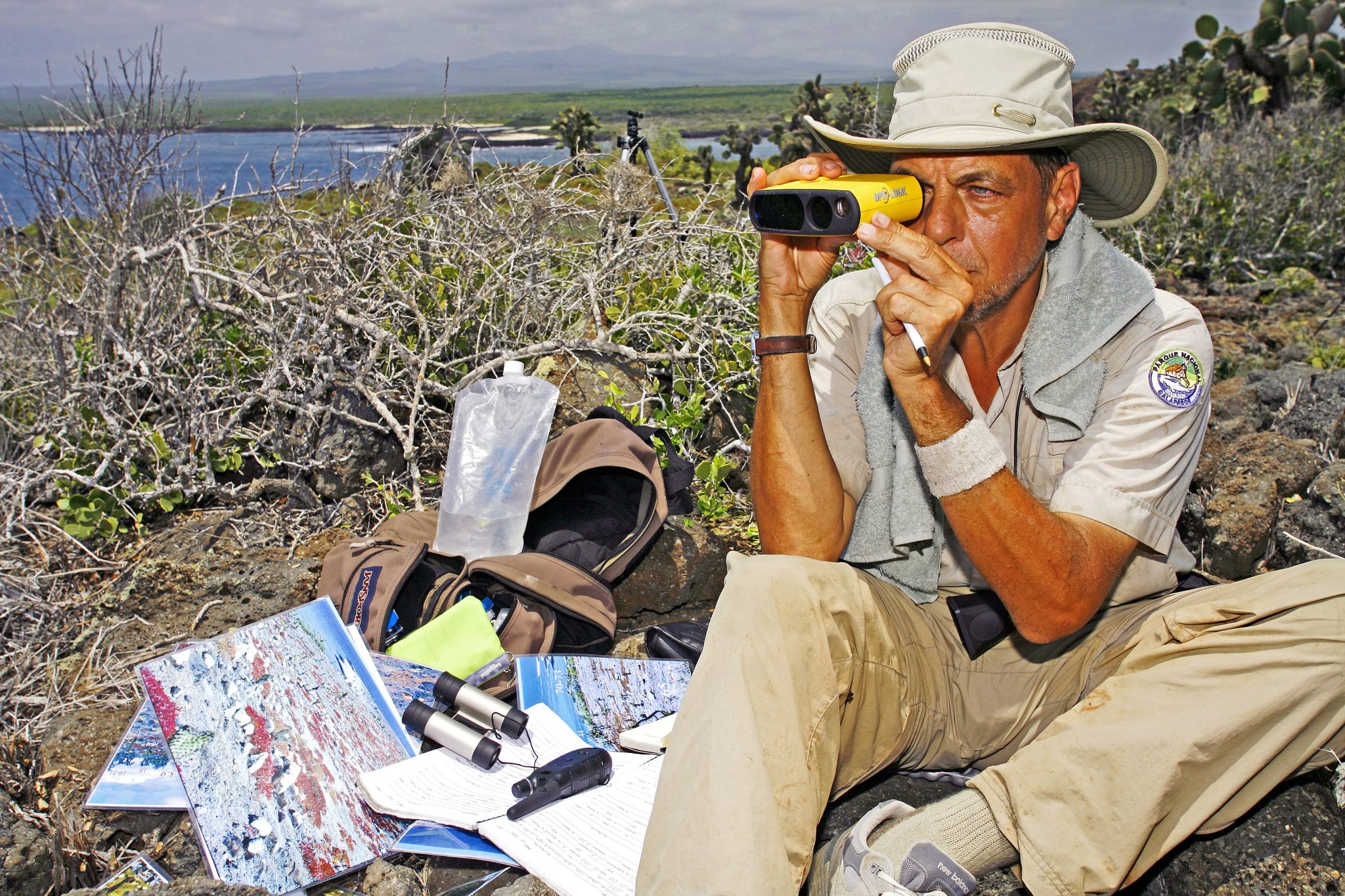
It is possible to measure the size or height of an object in an old photograph if one (1) knows the distance of the object from the camera and (2) if one also knows the size of any other object in the image. Using a laser hypsometer (which I am holding here in this photograph), my research team and I were able to reconstruct the age distribution of tree Opuntia on South Plaza fifty years ago and to show how this distribution had been transformed by an increasingly aging population over time.
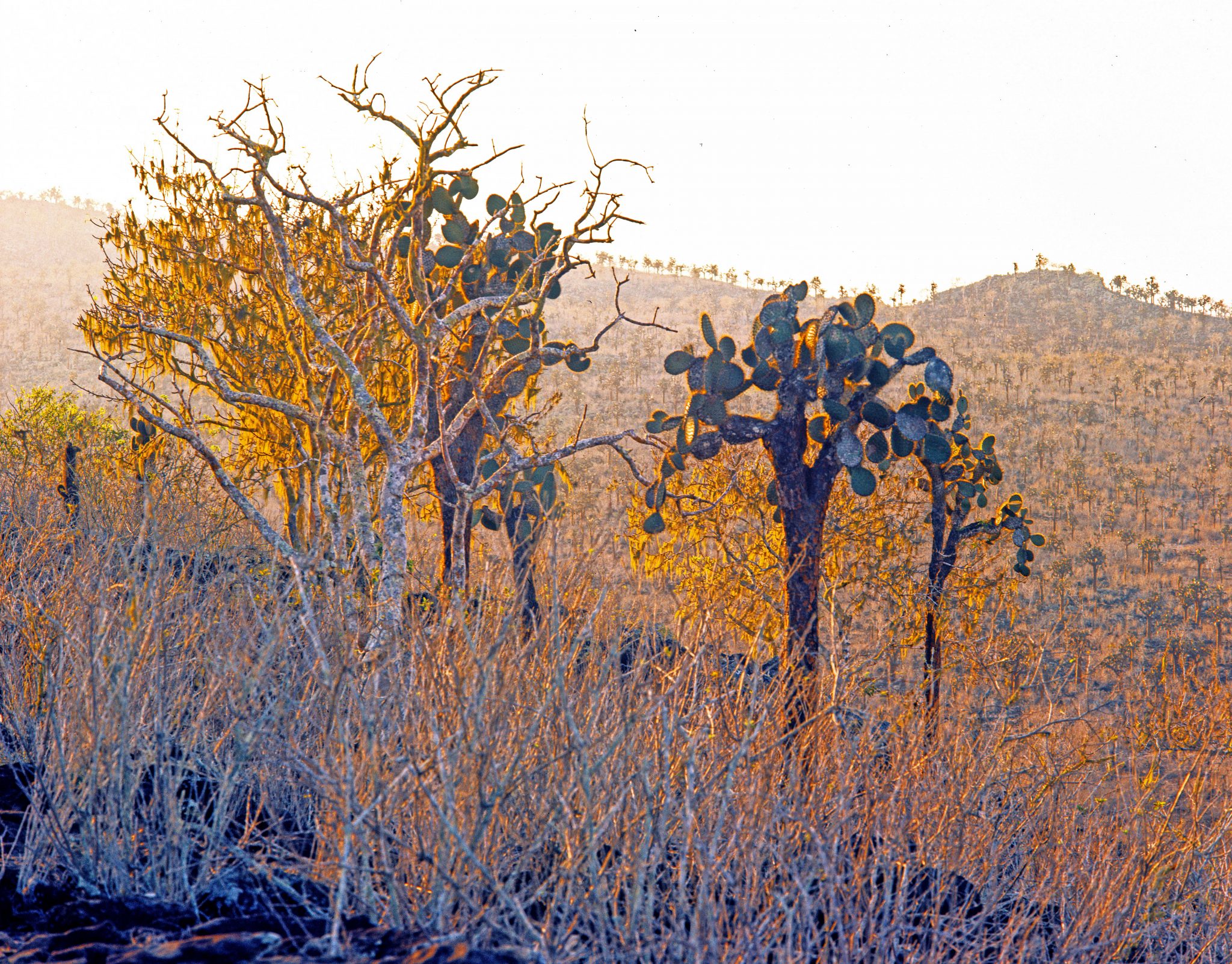
Arid-zone vegetation on Santa Fe. On the left is a Palo Santo tree (Bursera graveolens). These trees are leafless most of the year, to minimize water loss. Also visible are several tree Opuntias (Opuntia echois barringtonensis), an endemic subspecies confined to this island. The background is also studded with hundreds of Opuntias.
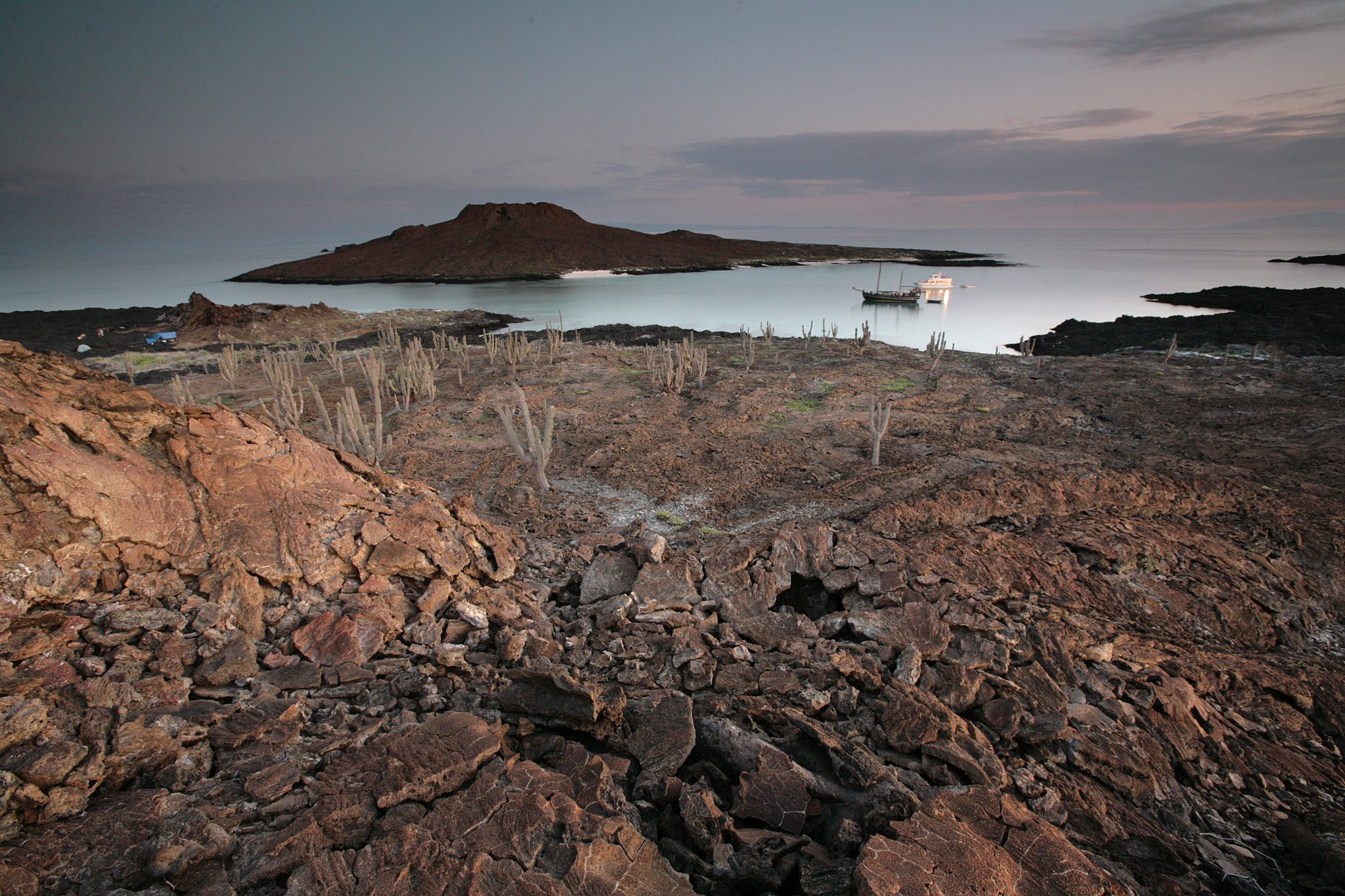
An area dominated by candelarba cactus (Jasminocereus thouarsi) on the southeastern coast of Santiago. In the background is Sombrero Chino, a small island that is a visitor site. Two tourist ships are anchored in the bay for the night. My team's campsite is visible on the far left.
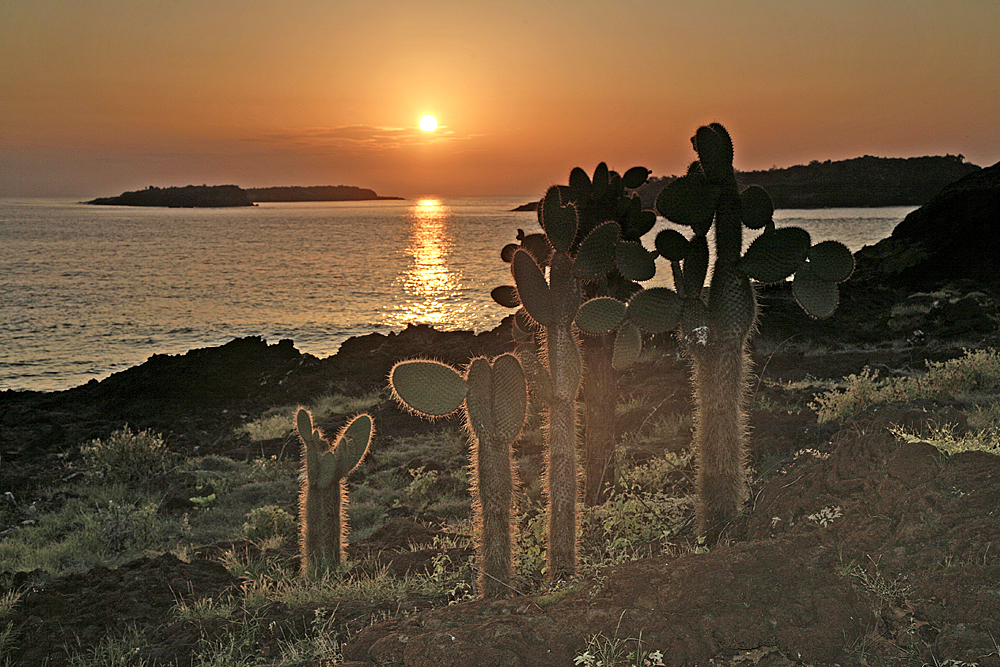
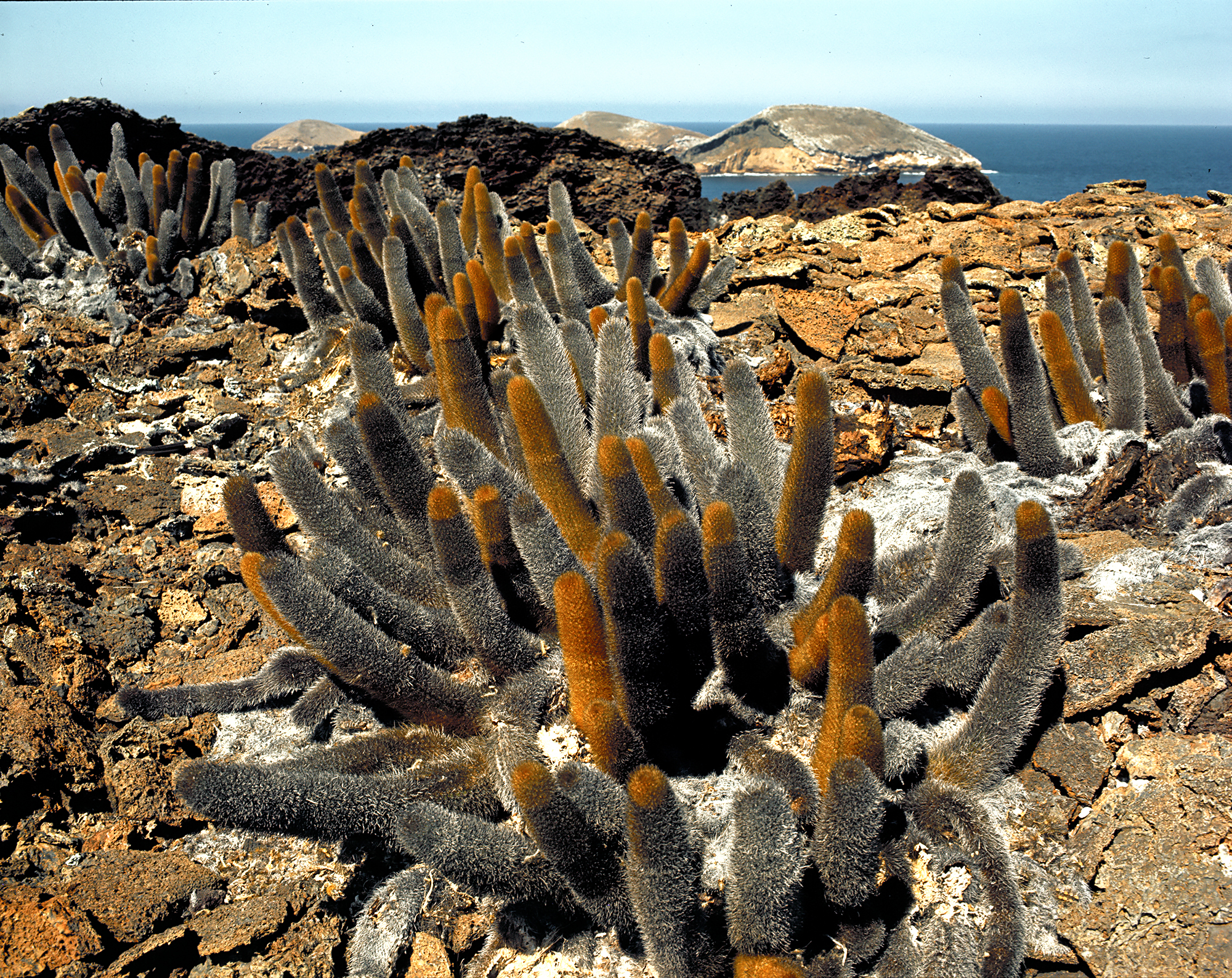
Lava cactus (Brachycerus nesioticus) on Sombrero Chino, with some of the Bainbridge Islands visible in the background.
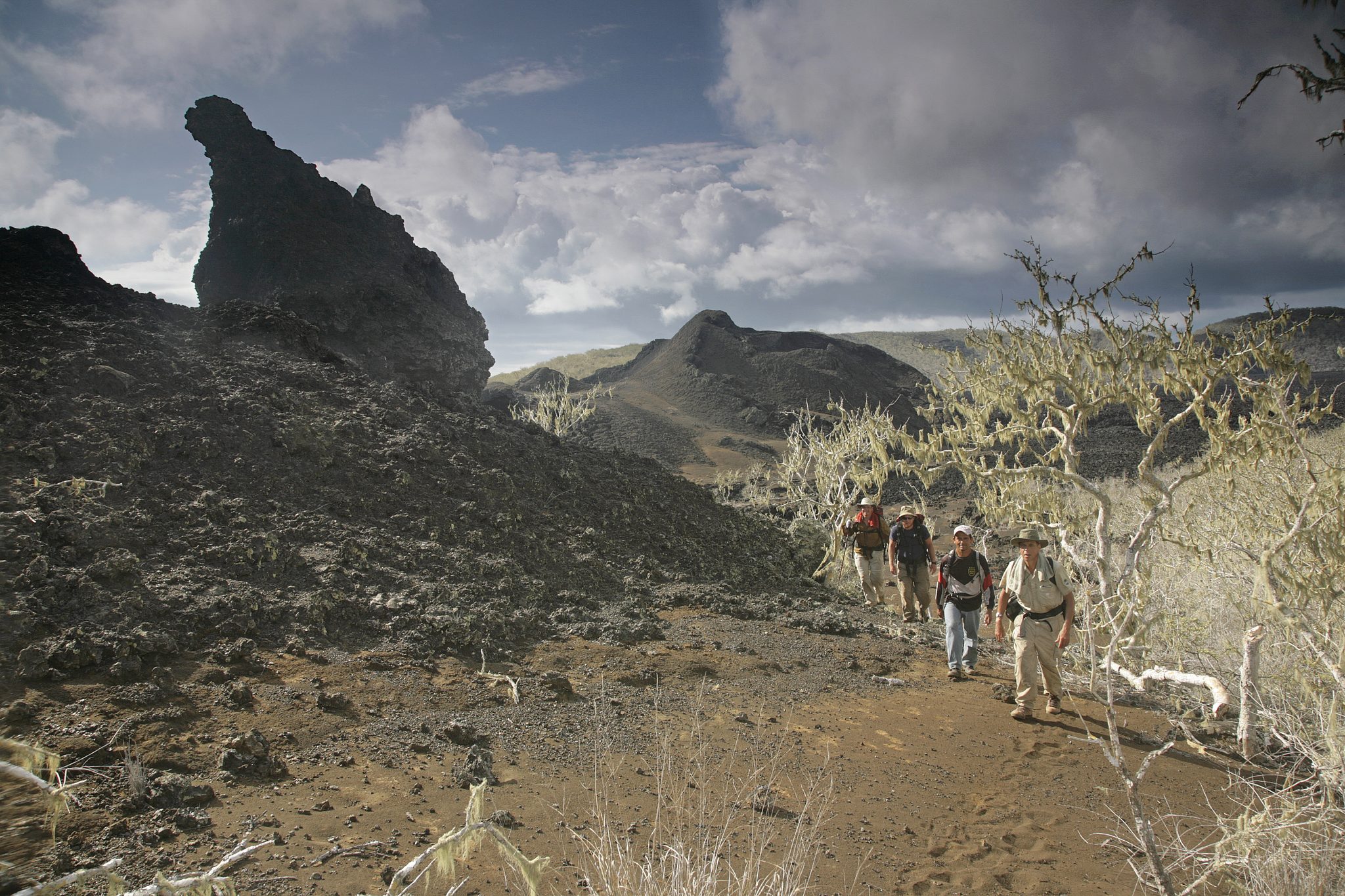
I and other members of my research team on the summit of Marchena, where we were collecting invasive wasps (Polistes versicolor). The vegetation to the right is covered with "old beard" lichens (species of Usnea and Ramalina). As Darwin noted during his 1835 visit, Galapagos tortoises are very fond of these lichens when they can reach them (Journal of Researches, 1839, p. 463).
In 2005, Alan Tye (shown here), a botanist working at the Charles Darwin Research Station, together with myself and two other researchers, followed a dry riverbed into the interior of San Cristóbal in the hope of finding Lecocarpus lecocarpoides, a plant in the sunflower family that had not been seen on this island since 1906. After five hours of walking in intense heat from our campsite on the coast, during which I became badly heat-stroked and partially blinded by sap from a poison apple tree (Hippomane mancinella), we finally found this specimen, which Darwin collected in 1835 (Sulloway, 2006).
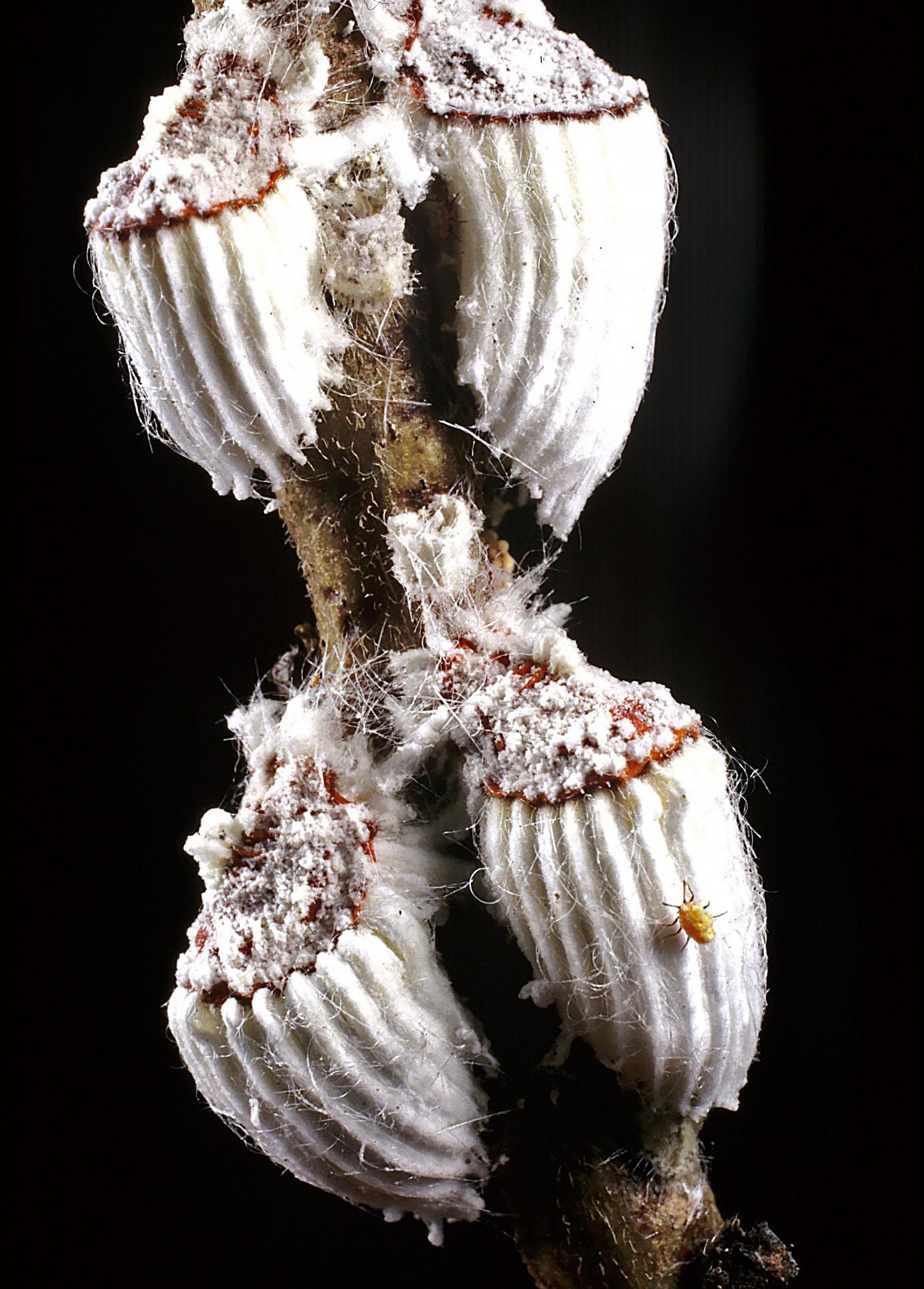
Cottony cushion scale (Icerya purchasi). These scale insects, originally from Australia, somehow managed to invade the Galápagos Islands and became a serious threat to the native vegetation. To combat these scale insects, another Australian insect--a lady beetle (Rodolia cardinalis)--was introduced and has proved very successful as a control. A "crawler," the first stage of the scale insect reproductive cycle, can be seen at the lower right.
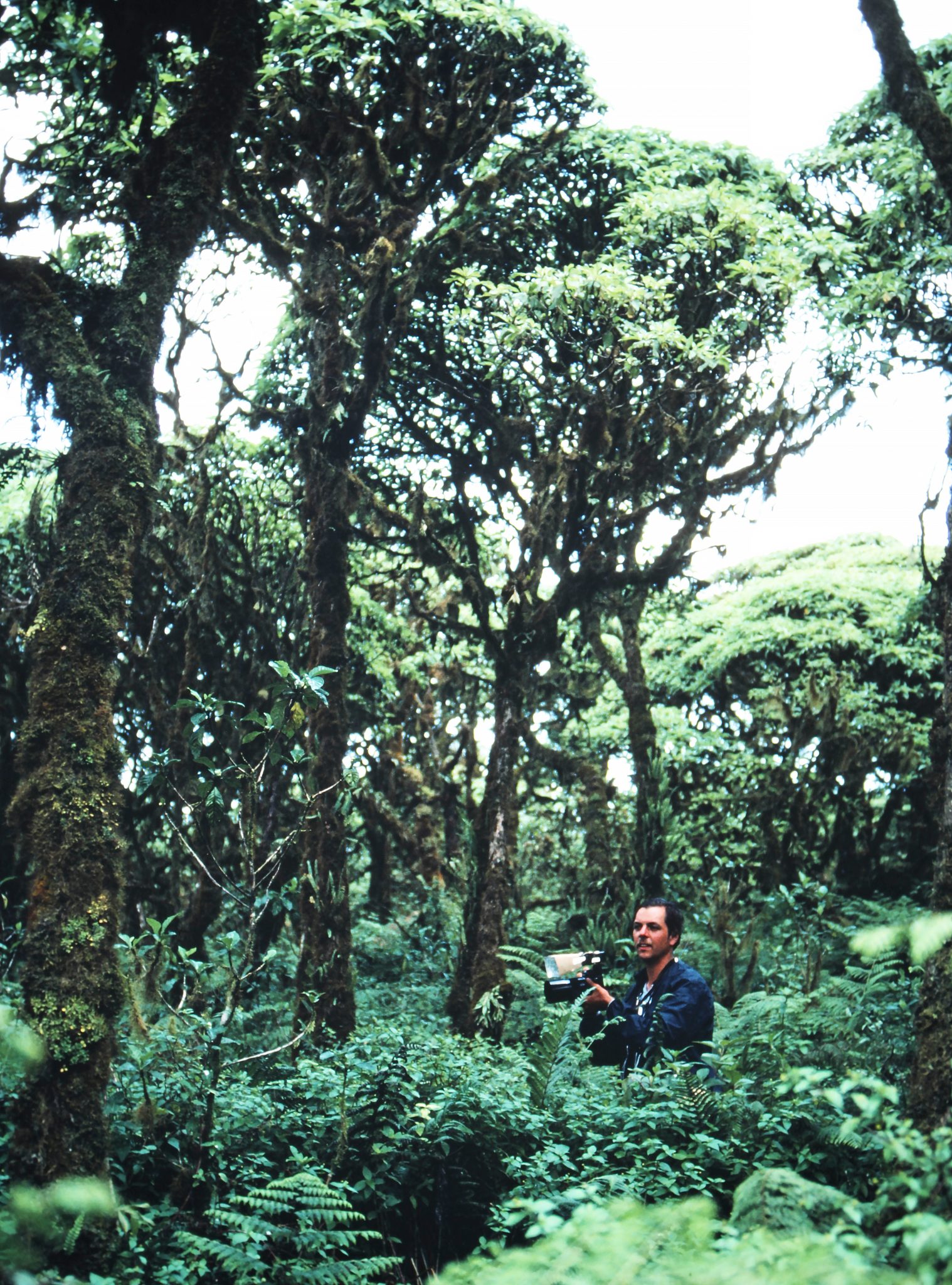
The Scalesia forest (Scalesia pedunculata) in the highlands of Santa Cruz, where I was photographing tree finches in 1982.
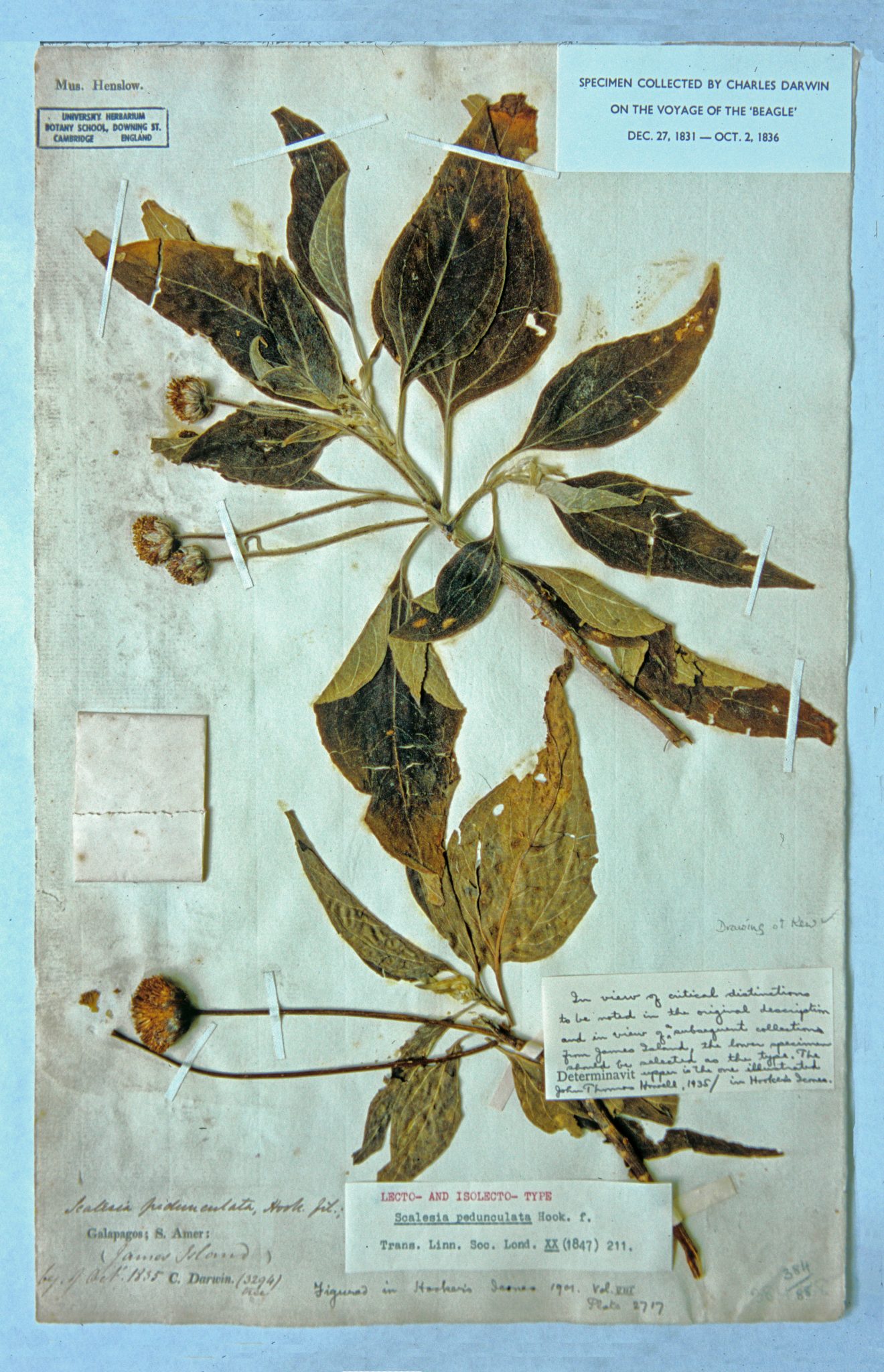
The type specimens for Scalesia pedunculata, collected by Darwin in the highlands of Santiago in October 1835. These Beagle specimens are now at Cambridge University.
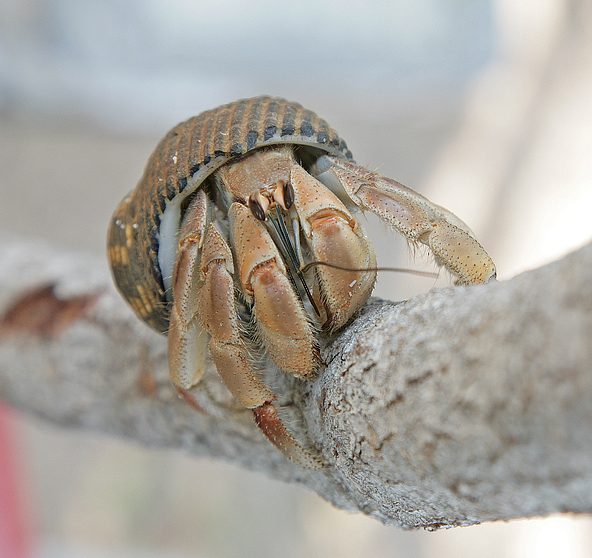
A hermit crab (Coenobita compressus). Hermit crabs have soft abdomens that are long and spirally curved. To protect themselves, they salvage empty seashells into which they can retract their entire body. Male hermit crabs have evolved long penises so they can copulate without leaving their shells, which otherwise might be stolen by other hermit crabs looking for a better fitting shell.
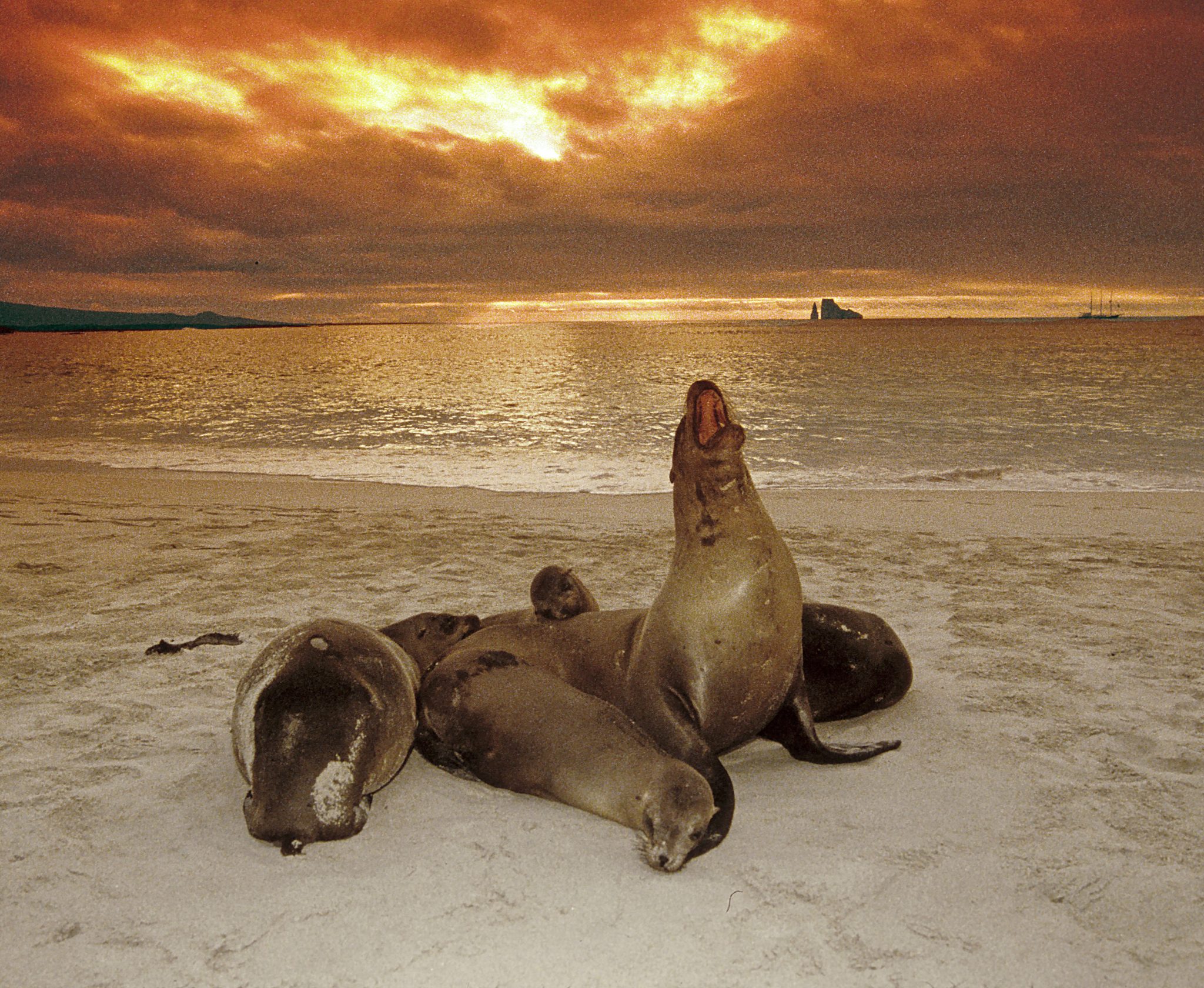
Sea lions (Zalophus wollebaek) near Cerro Brujo in on San Cristóbal. In the distance is Kicker Rock, the former interior of a crater whose softer outsides, as Darwin (1844, p. 101) noted, have eroded away.
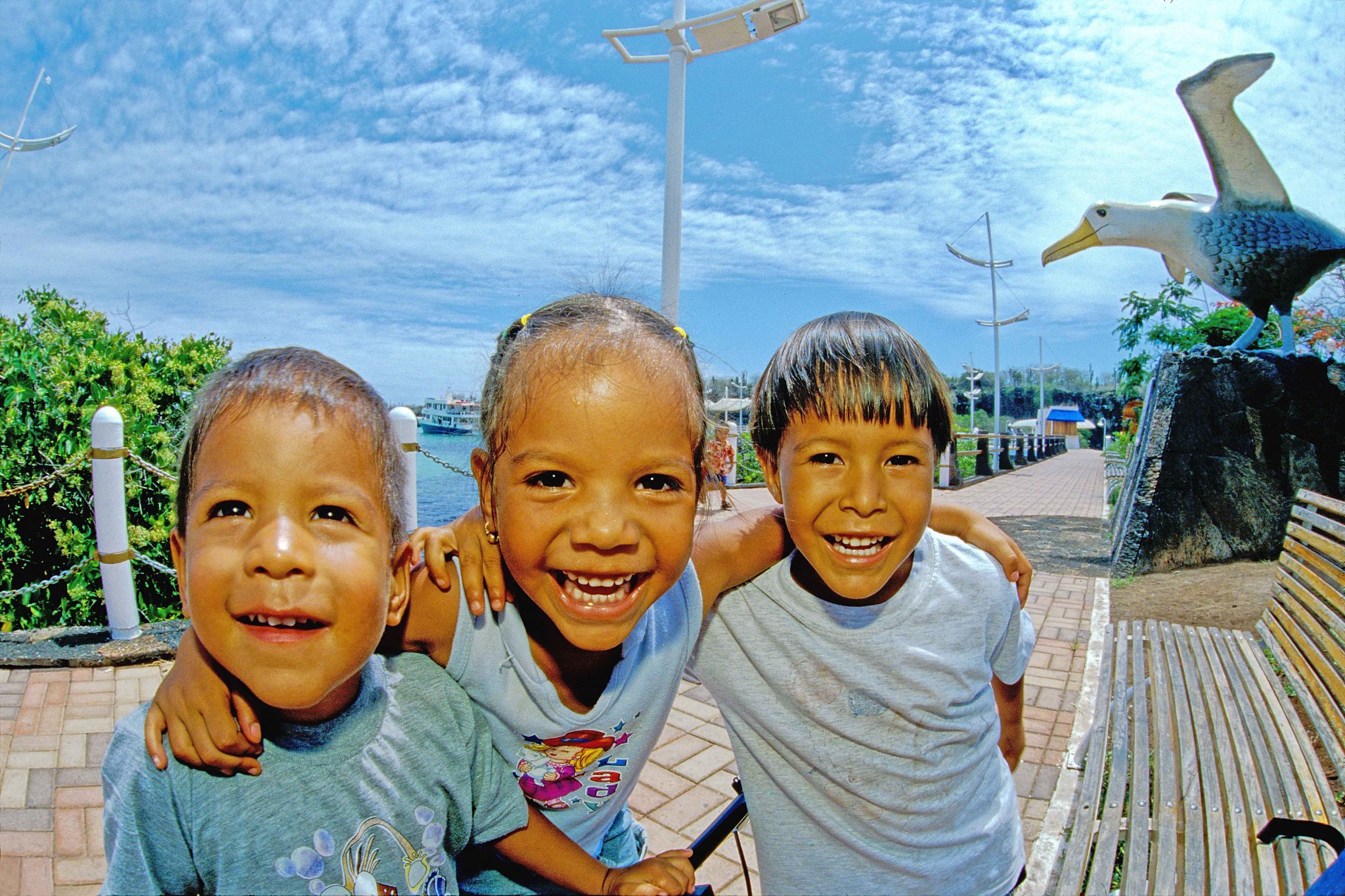
Three happy children in Puerto Ayora, near the Albatross statue in the town park. The Galápagos Islands have the highest population growth rate in South America, which has caused sanitation and other problems related to overpopulation within the islands. The number of children that one sees on the streets now, compared with thirty or forty years ago, reflects this dramatic increase in population.
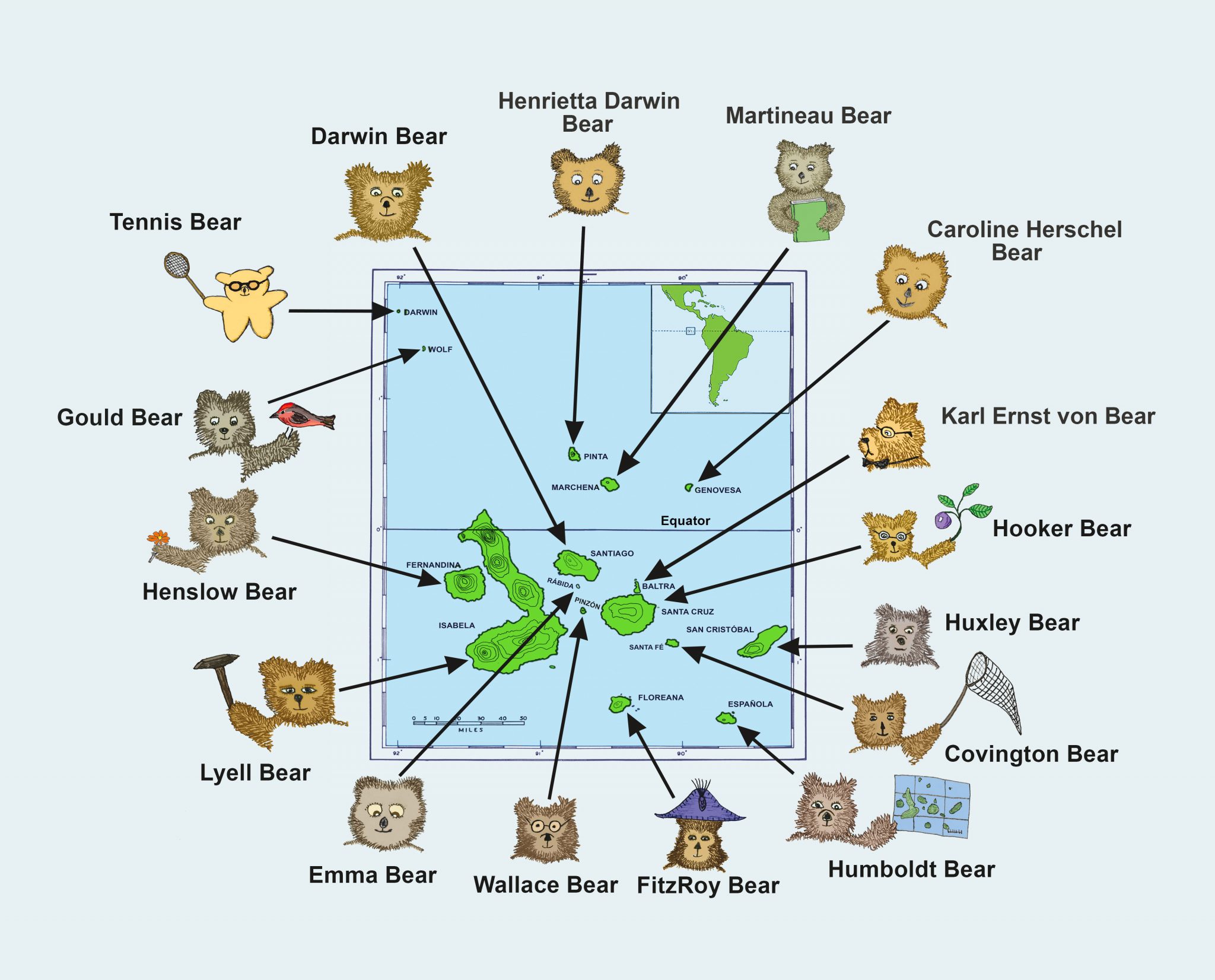
Nor should we forget to mention the Galápagos Bears, shown here along with the islands on which they originally evolved. Like the 4 species of Galápagos mockingbirds and the 17 currently recognized species of Darwin's finches, the 16 different forms of Galápagos bear reflect the role that geographic isolation plays in the evolution of new species. These 16 endemic bears are believed to be descended from ancestral colonists that are distantly related to an extant Peruvian species (Ursus paddingtonesis) and that probably reached the Galápagos Islands more than two million years ago. According to Harvard University Professor Edward O. Wilson, certain physical attributes of the Galápagos bears exhibit adaptive features that appear to have been influenced by the physical characteristics of the islands on which each bear evolved into its present form. For example, the overall size (S) of each form of bear is predicted by the formula S = 0.00084 x H (where H is the height of the island on which each bear evolved, measured in meters--see Darwin and His Bears , pp. 132-133).