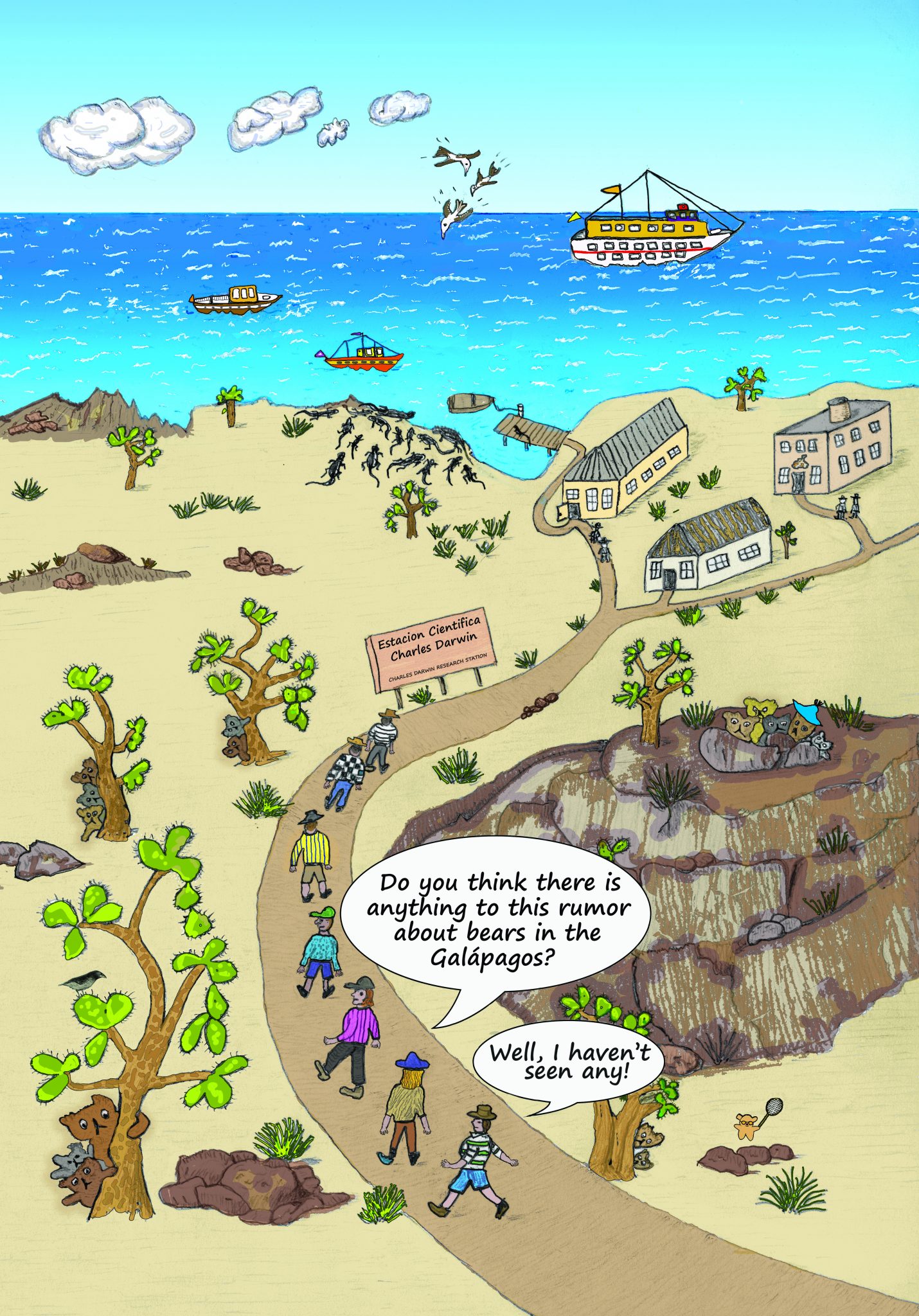
As reported in Darwin and His Bears, bear sightings in the Galápagos are relatively rare given that the bears tend to avoid contact with people they do not already know, such as their friends at the Darwin Research Station and Galápagos National Park Directorate. Still, there have been a number of purported bear sightings as documented in the following photographs. (Illustration from Darwin and His Bears, page 121.)
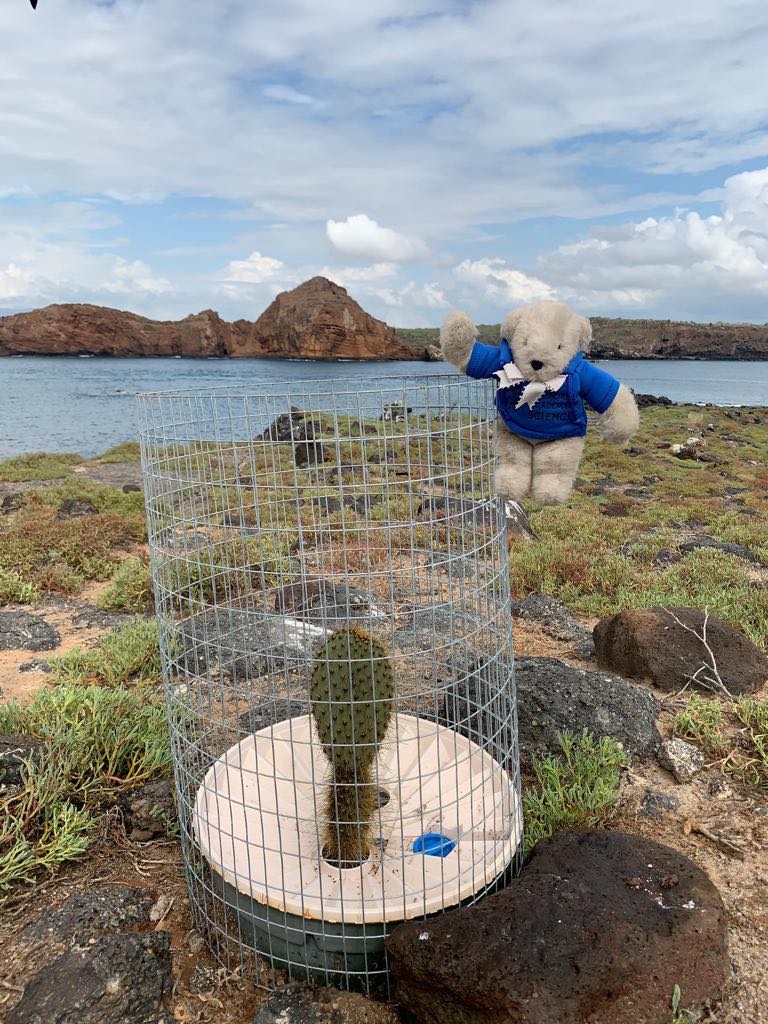
This photograph was taken on the island of Plaza Sur by a member of the Galápagos Verde Project in March 2019. In the background is Cerro Colorado, on the northeastern side of Santa Cruz, which confirms the photo's locality. The Galápagos Verde Project, led by Patricia Jaramillo, is currently restoring endangered plant species on islands in the Galápagos group where introduced species have caused ecological disruptions and native plant loss. For further information about giant tree Opuntia loss on Plaza Sur over the last half century, and its surprising cause on this particular island, see Sulloway (2015). Photo: Patricia Jaramillo.
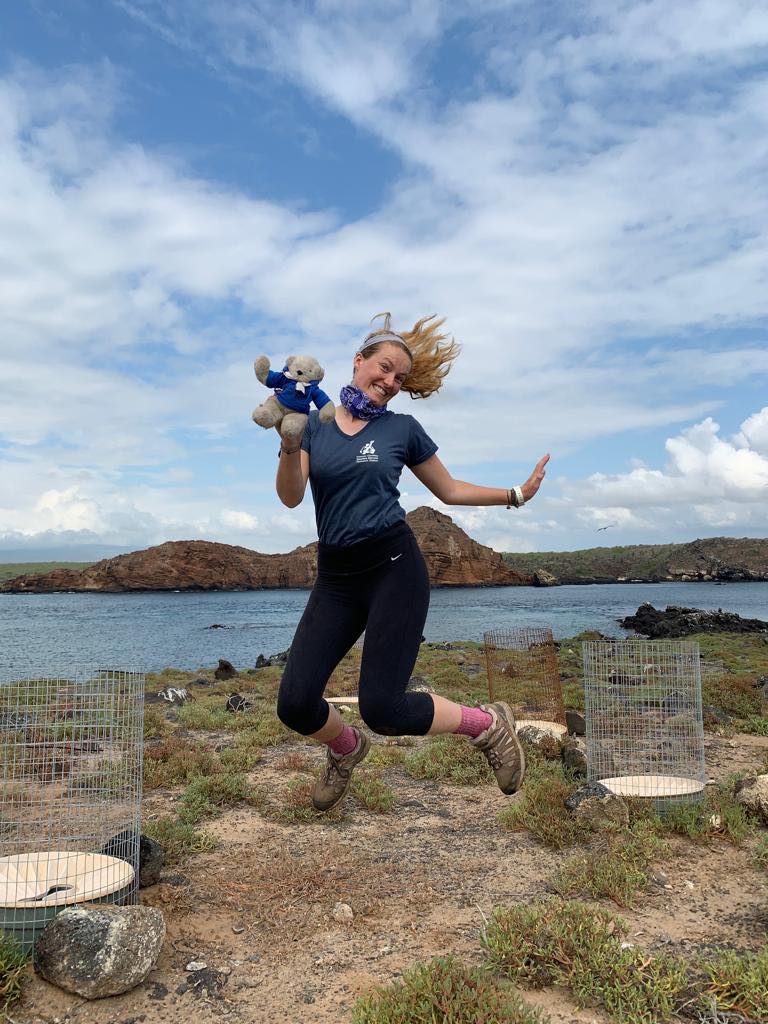
Ecologist and Darwin Station member Esme Plunkett expresses her excitement upon encountering a Galápagos bear on Plaza Sur (March 2019). Photo: Patricia Jaramillo.
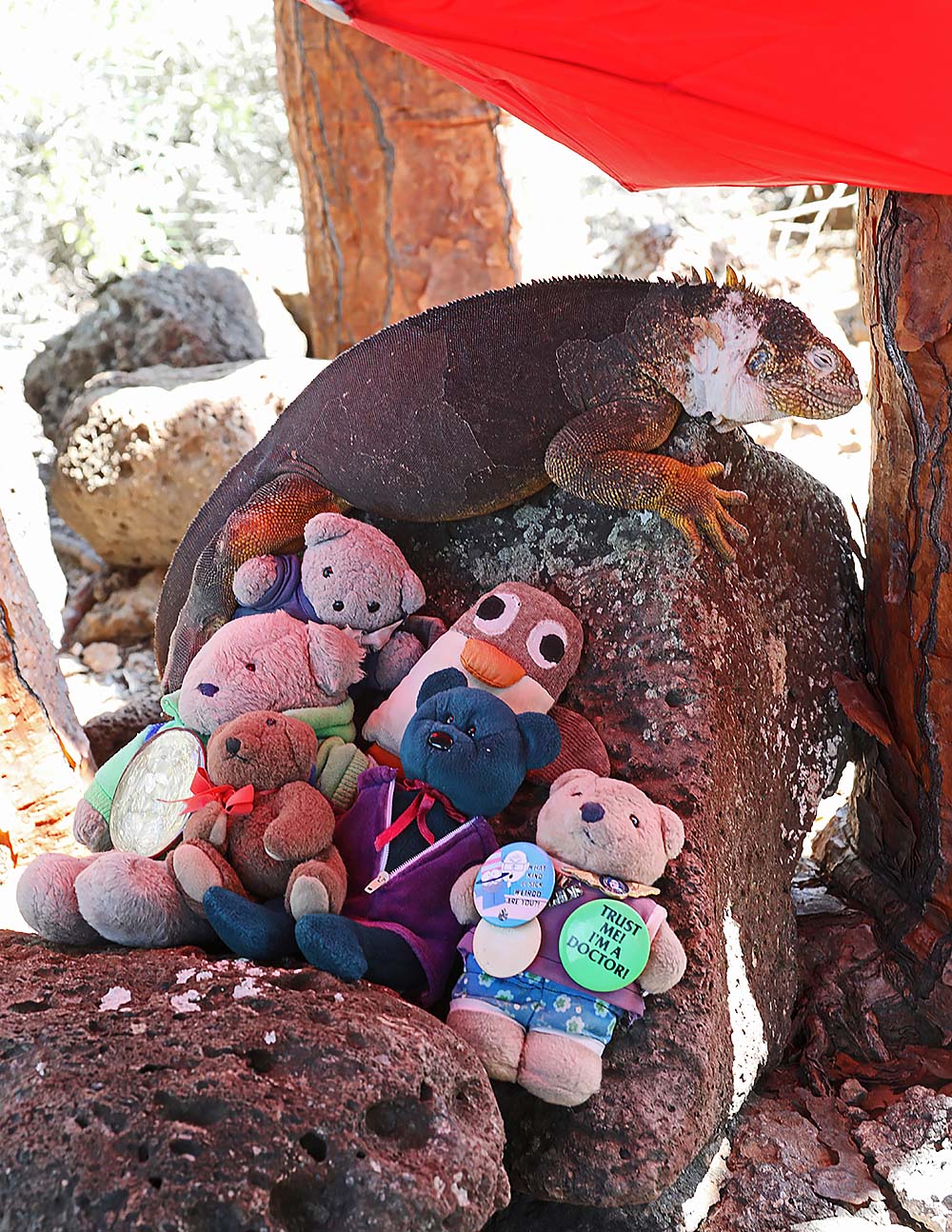
A small group of bears on Plaza Sur, together with their friend El Pingüino, taking a rest during fieldwork on that island in 2019. At the time of this encounter, these five bears (from left to right) answered to the names Darwin Bear, Wallace Bear, Covington Bear (who is standing behind Darwin Bear), Henslow Bear, and Huxley Bear. The land iguana did not give a name.
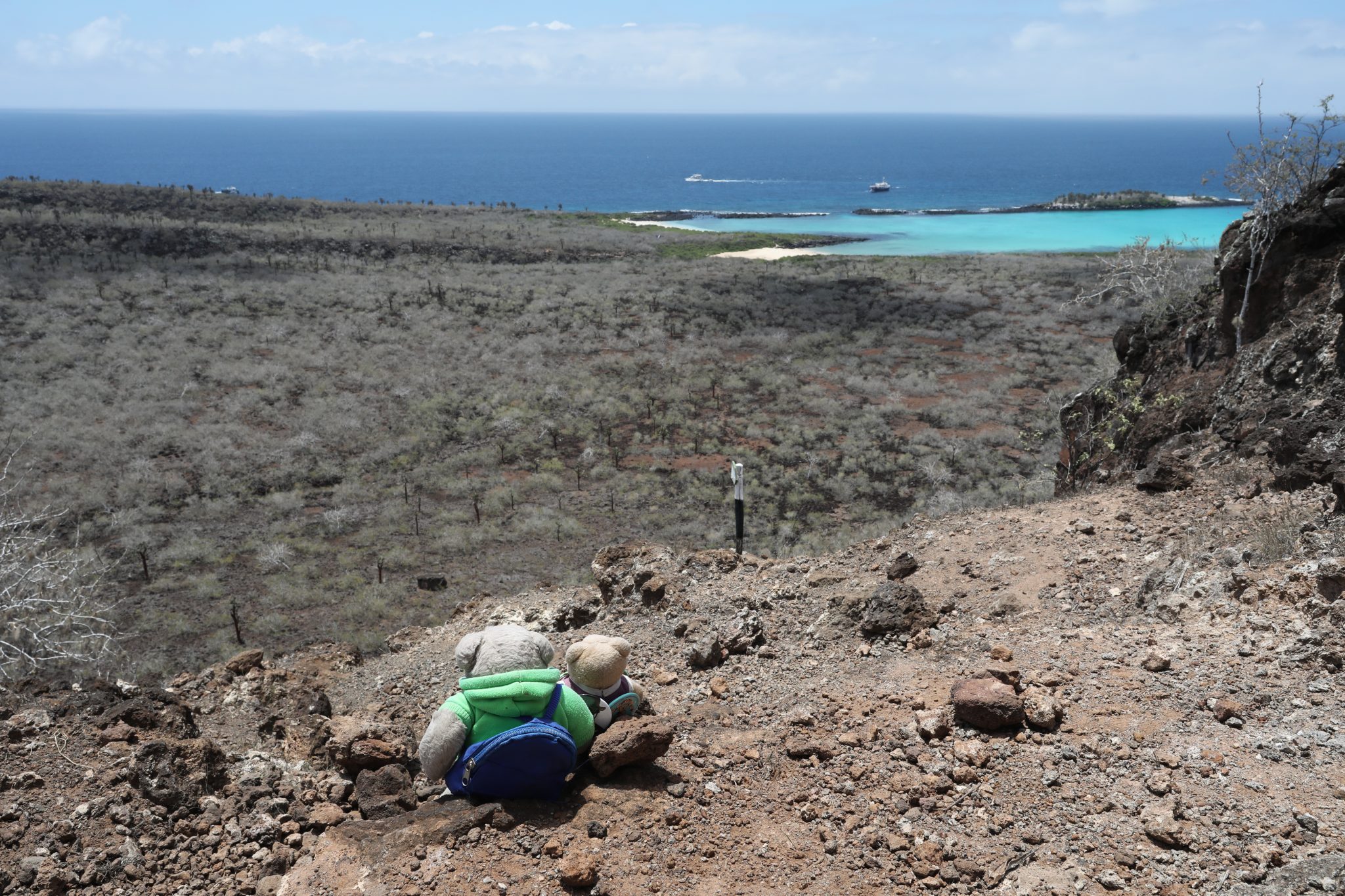
Darwin Bear and Huxley Bear at the top of the formidable tourist trail that ascends a steep cliff on Santa Fe (April 2019). Two tourist ships can be seen in the distance. This is a particularly well documented site in my repeat photography project and includes images taken at various different times between 1933 and the present.
The study of these repeat photography images, and their comparison with present-day images taken from the same location, has helped to elucidate ecological changes in the Galápagos over nearly a century, and hence to document the effects of introduced invasive species, such as goats, pigs, and rats on the native vegetation (Sulloway, 2015).
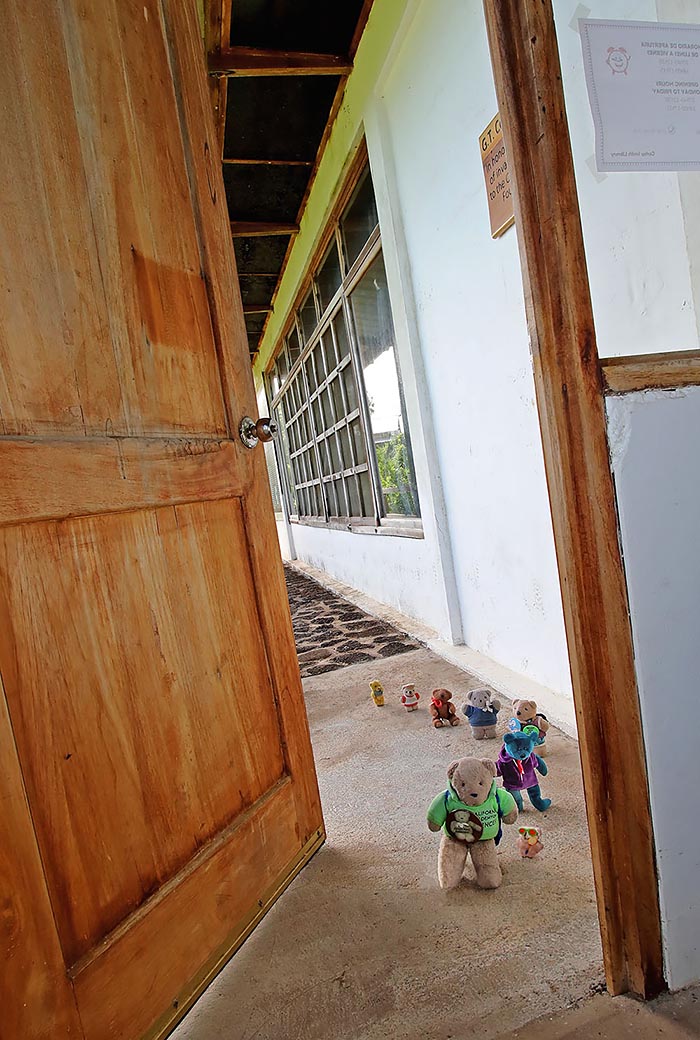
Eight bears whose images were captured using a camera trap set just inside the entrance to the Darwin Station Library. This library is where the bears are reputed to sleep at night whenever they are not doing fieldwork on other islands. From front to back: Darwin Bear, Tennis Bear, Henslow Bear, Huxley Bear, Covington Bear, Wallace Bear, Lyell Bear, and Hooker Bear.
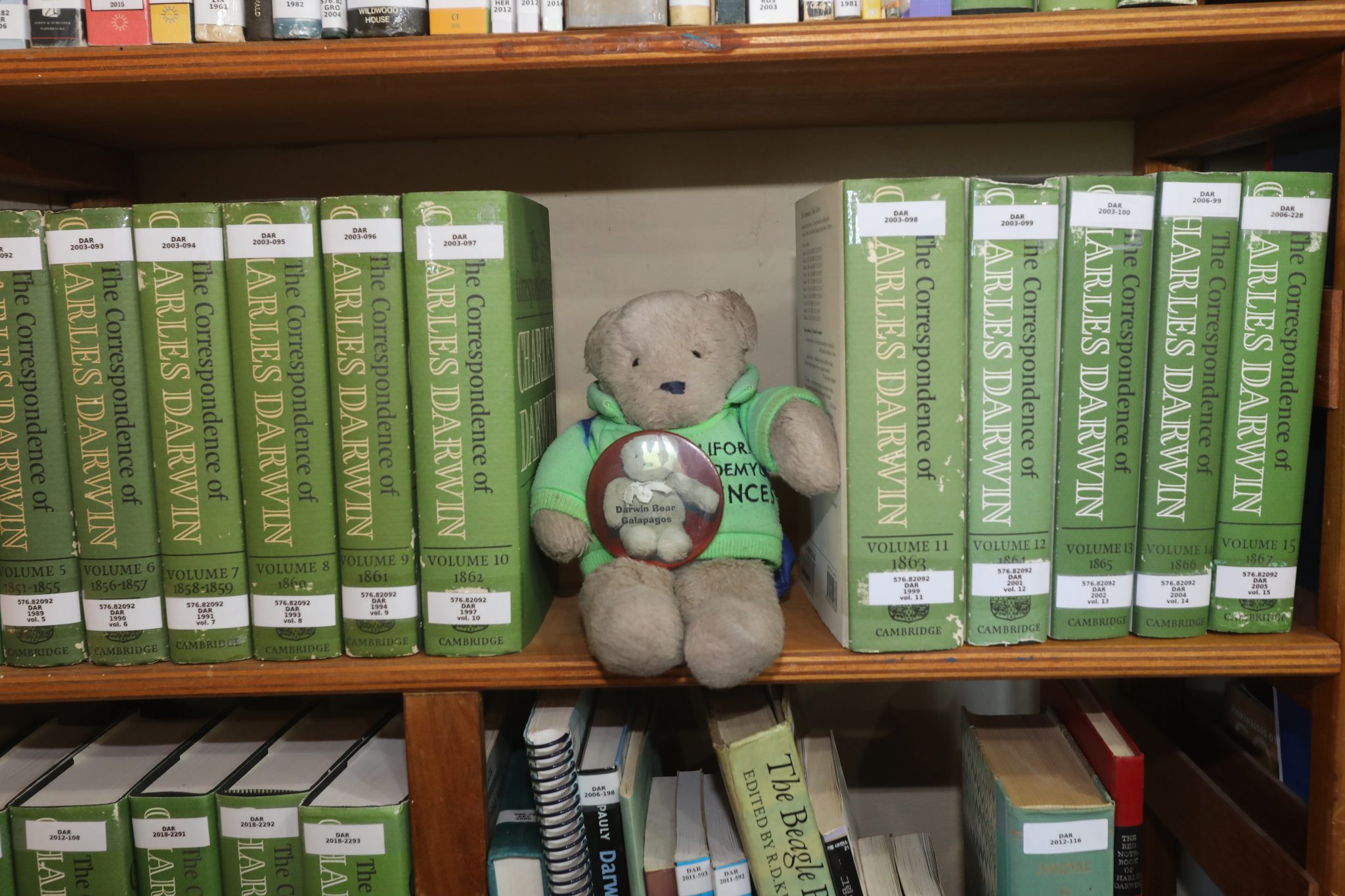
Darwin Bear inside the Darwin Station Library. The bear is apparently consulting some of the projected 30 volumes of the Correspondence of Charles Darwin, of which 28 volumes have been published to date by Cambridge University Press. On either side of the bear are Darwin's letters from 1862 and 1863, written three and four years, respectively, after publication of the Origin of Species (1859).